What if I buy Full-stack but want to work as Frontend?
Topic:Learning
Answer:
A popular and good strategy. You can finish the Frontend part, get a Frontend job, and finish the backend later while working or after.
A typical and smart scenario. You buy Full-stack, but after finishing the Frontend modules (HTML+CSS, JavaScript, React, Redux, TypeScript) you feel ready to interview as a Frontend developer. You hit the market with a strong Frontend focus (and 4 portfolio projects), and the rest of the course — Node.js, backend, databases — you take calmly after work or postpone for later. Important: tell your coordinator when you notice this goal change — we will adapt the Employment module to the Frontend profile (CV, Mock Interview, job offers). Bonus: the backend knowledge you gained adds value even on a pure-Frontend role — you understand APIs, databases, architecture, which makes you a better Frontender. Do not be afraid — the main thing is to start (source: Mate academy data 2026).
What we teach
Our career paths
4+ months
Data analyst
Dig into data to uncover trends and hidden insights, and help businesses make smarter decisions.
4+ months
QA engineer
Hunts down software bugs before they cause trouble, ensuring every user enjoys a flawless and enjoyable experience.
4+ months
Python developer
Writes powerful Python code to build apps and automate boring tasks, helping users do a lot more in less time.
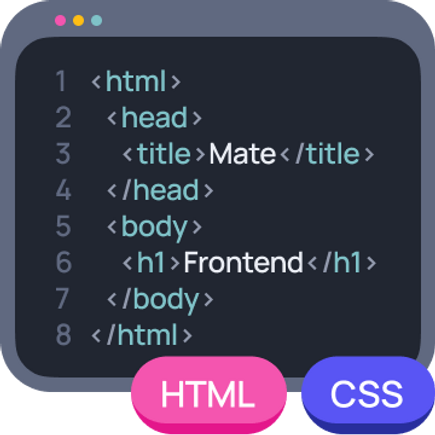
5+ months
Front-end developer
Builds the visible part of websites and apps, ensuring every click and scroll feels smooth and visually impressive.
4+ months
Java developer
Creates rock-solid Java applications that deliver reliable, high-performance solutions across a variety of industries.
5+ months
Full-stack developer
Develops both the front and back end of web apps, creating a smooth and high-quality experience that users love.
3+ months
Automation QA engineer
Create automated tests to quickly detect bugs and verify software quality.
3+ months
Performance marketing specialist
Analyzes the audience, launches advertising campaigns, and optimizes traffic to increase brand awareness and drive sales.
3+ months
Specjalista automatyzacji AI
Designs and ships AI automations for company processes that save the team hours of work and run reliably in production — without coding.
Our values