Advanced
Get AI tools training as a gift
4.9
Automation QA engineer Course: Qualification Enhancement

Perfect for career boost
90%
of students had no prior experience in coding
Course updated for 2026
100%
updated curriculum aligned with employer requirements

6 000+ Mate graduates are already working in IT
rating based on Google reviews
Automation QA engineer: Salary
$2,400
+22%YoY salary growth. Source: DOU
Who is Automation QA engineer?
A QA automation engineer writes automated tests that catch bugs and errors way faster than manual testing ever could. Already know Python or Java? That's a big plus — those skills will help you level up quickly in testing. And the best part? You can start as a trainee after the online course and move on to better roles, higher salaries, and real career growth from there.

Skills tech companies are hiring for
80% of the course is hands-on practice — so you'll leave ready to land a job as a QA engineer.
Mentors who actually work in QA automation
You'll learn from mentors who work in AQA daily. They'll help you break down complex topics and walk you through tasks.
One platform, all the tools
Video lessons, hands-on tasks, and projects — everything's in one place to help you start strong in automation testing.
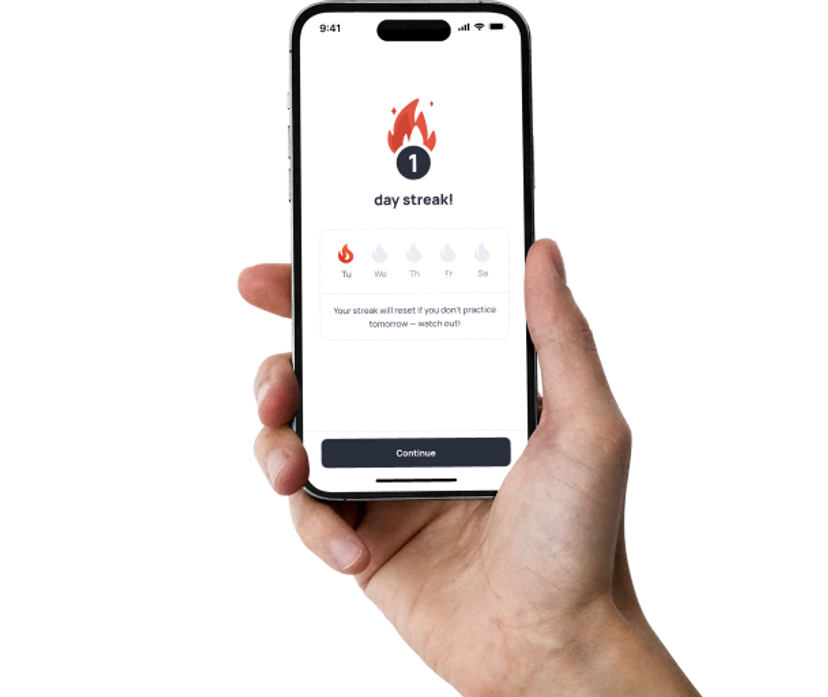
Your perks in the Automation QA course

Job referrals
Get early access to QA automation job openings

English lessons
Build must-have skills for interviews and AQA roles

Job search tips
Write a resume and cover letter that fits the AQA market

AI skills module
Learn how to analyze bugs and generate test scenarios with AI

Mock interviews
Practice interviews for automation QA positions
*You can buy English lessons separately.
FORMAT COMPARISON
Which studying format suits you?
Weekdays, 9 am - 6 pm
In your free time
This might be your CV

Marta K.
Automation QA engineer
Skills
- Know how to build a scalable test automation project from scratch using the Playwright tool
- Have experience working with JavaScript for test automation tasks
- Understand the Page Object Model pattern, test automation best practices, and can apply them in practice
- Have experience working with tools for static code analysis and formatting
- Can create automated test scenarios for both the frontend (UI) and backend (API) of web applications
- Have skills in working with Git, GitHub, and the code review process
- Know how to make test reports informative and how to analyze test execution results
- Understand CI/CD concepts and can integrate test automation into the CI/CD flow
Technologies







90%
of students had no prior experience in coding
Build a project portfolio that proves you've got the skills
You'll write automated tests, create bug reports, and work with AQA tools — and you'll have real work to show during interviews.

What's covered
Course roadmap
Get Started
3 topics
Test Drive
4 topics
Get to know the course
Topics
- Automated Testing Introduction
- Playwright Tool Introduction
- Run the First Test
- The Basic Page Interaction Methods
JavaScript Basics
14 topics
Discover the programming language best suited for beginners. We'll kick off with strings, functions, conditionals, loops, arrays and a few more!
Topics
- Introduction
- Your First JavaScript Program
- Main Concepts
- Numbers
- Strings
- Boolean
- Functions
- Conditional Statements
- Arrays
- Loops
- String Iteration
- Strings Methods
- Working With Arrays
- Practice
Playwright Test Automation Core
11 topics
This module introduces the basics of web UI test automation using the Playwright tool. You will understand what test automation is and begin to create simple automated tests for web pages.
Topics
- Automated Testing Introduction
- Playwright Tool Introduction
- Run the First Test
- The Basic Page Interaction Methods
- Built-in Locators
- Assertions
- Custom Locators
- Test Organization
- Page Object Model
- Test Execution Configuration
- Module Recap and Next Steps
GenAI Essentials
6 topics
Learn how to use GenAI responsibly and effectively.
Topics
- How GenAI Works
- Limitations of GenAI
- Prompting
- Responsible Use
- GenAI for Learning
- How to Keep Up With AI
Git and Terminal
5 topics
Terminal is an important tool for any developer, so it's high time for you to exercise basic commands! You'll start using a Git version control system, too.
Topics
- Environment Setup
- Command Line Basics
- Git Basics
- Working With Branches
- Working With Remote Repo (GitHub)
Git and Terminal — Practice
1 topic
Pursuing practice is something worth envying. So, without further ado — let's practice Git and Terminal.
Topics
- Git and Terminal
HTML + CSS Basics
16 topics
Next up: introduction to HTML and CSS. Find your way around fonts, semantics, responsiveness, selectors and specificity, media queries, links, and forms.
Topics
- Environment Setup
- HTML Basics
- CSS Basics
- Colors and Fonts
- Box Model Basics
- Semantic Basics
- Responsiveness Basics
- CSS Selectors
- Pseudo-Elements and Pseudo-Classes
- Specificity
- Links and URLs
- Images
- Media Queries
- Forms
- Position
- Extra Topics
JavaScript Basics Extended
10 topics
On the basics stage we omitted a fascinating, but demanding concept: objects. We'll introduce you to them now, though not only — JavaScript still has a few aces up its sleeve!
Topics
- Code Style
- Working With Numbers
- Loops in Details
- Working With Strings
- Functions Revisited
- Switch
- Type Conversion
- Logical Operators
- Object Basics
- Extended Extra
How the Web Works
6 topics
We interact with the Internet day by day, and yet, few know how it all works. If you don't, either — we've got your back. We'll explore the OSI model, HTTP, encryption, APIs and security issues.
Topics
- Introduction to the Web
- OSI Model
- HTTP
- API Interface
- Encryption
- Security in the Web
Testing Web Applications
3 topics
Every platform has its own characteristic, and this should be reflected in QA processes. To address this, you'll learn testing web applications — and understand what's so *web* about them.
Topics
- Browser DevTools
- Web Theory and Postman Basics
- Postman Advanced
Playwright Test Automation Core Extended
9 topics
Build an equipped and scalable UI test automation framework.
Topics
- Module Introduction
- Static Code Analysis and Formatting
- The test.step Function
- Helpers, Constants, and Logger
- Fixtures
- Browser, Context, and Page
- Tests Parametrization
- Playwright and Allure Report
- Module Recap and Next Steps
JavaScript Advanced
13 topics
Having mastered the fundamentals, we're free to take on the advanced issues. So, brace yourself for methods, closures, prototypes, constructors, classes, and... something extra.
Topics
- How to Solve Tasks on Github
- Object Advanced
- Methods
- Array Methods
- Callbacks
- Array Iteration Methods Implementation
- Array Iteration Methods Usage
- Array Iteration Methods Test
- Closures
- JS Practice
- Prototype
- Constructors
- Classes
Docker Core
9 topics
First, we'll be up against containerization technology, and then — a de facto standard for distributing and running web app applications, Docker. How exciting!
Topics
- Docker Setup
- Docker Introduction
- Docker Internals
- Docker Basics
- Containerizing an App
- Managing Containers
- Docker Volumes
- Docker Compose
- 12-Factor App
Playwright Test Automation Advanced
10 topics
Test your backend and implement continuous testing for CI/CD. Use best practices in automation to ensure fast and stable testing, and effectively increase test coverage.
Topics
- OOP and Test Automation
- API Testing
- Automated Testing Classifications
- Docker and Test Environments
- Work with Dialogs, Frames, Events
- Creational Design Patterns
- Structural Design Patterns
- Running Auto-Tests in CI/CD
- Best Practices for Test Automation
- Module Recap
Employment
9 topics
Ready to enter the tech market? Well... we'll get you ready — with a great resume, cover letter, a LinkedIn profile and mock interviews. Recruiters are in for a true discovery!
Topics
- Employment Roadmap
- Preparing Your Resume
- Interview Preparation
- Cover Letter Preparation
- LinkedIn, DOU, Djinni
- How to Find and Apply for Vacancies
- Job Search Tips: Talking to Recruiters
- Work details FAQ
- MilTech
Claude Code
59 topics
By the end of this course, you'll use Claude Code confidently in your real daily work - setting it up, shaping it to your own projects, connecting it to your tools, and running several agents at once. You'll finish with a complete, shareable setup built on a codebase of your own.
Topics
- Meet Claude Code and get it running
- Your first Claude session
- How Claude actually makes a change
- Permission modes: staying in control
- Headless mode: quick answers without the chat
- Resuming and managing sessions
- Slash commands and checking your context
- Running Claude Code in your editor
- Running long commands in the background
- What CLAUDE.md is and why it loads every session
- Conventions, build commands, architecture
- Writing rules that stick
- Scope: project-level vs. user-level vs. nested files
- When not to use CLAUDE.md
- Project rules & permissions
- Output styles: choosing how Claude responds to you
- Set up Claude on a real project
- The plan-then-execute mindset
- Entering and reading a plan in plan mode
- Approving, editing, and looping on a plan
- Model tradeoffs: Opus vs. Sonnet vs. Haiku
- Switching models mid-session
- The opusplan hybrid
- Managing context and cost across the loop
- How Claude works with your repo: status, diffs, history
- Committing well: staging and writing good commit messages
- Branches and pull requests
- Reviewing code and PRs with Claude
- Resolving merge conflicts
- Ship a change end to end
- What MCP is: Claude Code as a client to external tools
- Adding an MCP server
- Using MCP tools inside a session
- Scoping and managing servers: project vs. user
- MCP safely: permissions, secrets, and trust
- Letting Claude use CLI tools
- CLI tools vs. MCP servers: when to use which
- Claude skills
- CLAUDE.md vs. skills
- Creating a skill
- Organizing & reusing skills
- Custom slash commands: turning a repeated prompt into a one-word shortcut
- Passing arguments to a command
- What hooks are: actions that run on their own at key moments
- Common hooks: auto-format after an edit, block a risky command, run a check
- Writing and scoping your own hook
- Running Claude without you: CI, scheduled jobs, and pre-commit
- Wire Claude into your stack
- What a subagent is: isolated context, returns only results
- Built-in subagents: Explore, Plan, general-purpose
- Why parallel subagents help: context hygiene and speed
- Creating a custom subagent
- Tool and MCP permissions for subagents
- Orchestrating multiple subagents in parallel
- What a plugin is: one bundle of commands, skills, subagents, hooks, and MCP
- Installing and toggling plugins with /plugin, and the marketplace
- Building your own plugin from the pieces you've already made
- Sharing a plugin with your team
- Build a multi-agent workflow
Algorithms and Data Structure
11 topics
Don't go running just yet, algorithms simply need some taming. Data structures, too: we'll take on arrays, linked lists, stacks, queues, hash maps and sets... among other things.
Topics
- Module Overview
- Algorithms complexity
- Arrays
- Binary search
- Two pointers
- Linked lists
- Stack
- Queue
- Trees
- Binary search tree
- Priority queue
199
Topics
4
Projects
Professional qualification
What’s your path to becoming a Automation QA engineer?
Land your job in tech
Start your new job as a Automation QA engineer.

Get in touch
Do I need a technical background? When can I start?
- We'll answer all your questions
- Help you choose the right course
- Get you in on our best deals
Skill level after the course
Mate graduates ace technical interviews






































Who will guide you?

Coaches

Mentors

English Teachers

Education coordinators

Employment coordinators

Get in touch
Let's get in touch
- We'll answer all your questions
- Help you choose the right course
- Get you in on our best deals
Faq
Got questions? We’ve got answers
What's the difference between the full-time and flex formats for the Automation QA course?
What's the difference between the full-time and flex formats for the Automation QA course? Full-time format — for those who want to master automation testing fast:
Online learning from 9:00 to 18:00 (Mon–Fri)
Regular webinars, Q&A calls, and practical assignments
Ongoing support from mentors and daily interaction with your group
Not suitable if you're also working or studying
Flex format — for those who want to become an Automation QA on their own schedule:
Learn whenever it works for you — mornings, evenings, weekends
Full access to mentors, group chat, and Q&A sessions
Lifetime access to the course platform — revisit anytime
Easy to combine with work, freelancing, or university
In both formats, you'll get:
Real-world practice, case studies, and portfolio projects
A certificate you can use on LinkedIn or during your job search
Full career support to help you break into AQA
Will I get a certificate after the course?
Yes! Once you complete the course, you'll receive a certificate that confirms your skills in automation testing — including writing automated tests, using AQA tools, analyzing bugs, and creating reports.
You can include this certificate in your resume or LinkedIn profile, or show it during interviews. Many of our graduates already use it to land their first jobs in Automation QA.
What if I'm not sure automation testing is for me?
It's totally okay to feel unsure — sometimes questioning your choice helps you make a better one. If you're wondering whether Automation QA is the right path, just leave a request for a free consultation.
One of our managers will walk you through the course, what it's like to work in QA, what job options are out there, and help you figure out what truly fits you.
How do I apply for the Automation QA course? Are there any age limits?
Applying is easy — just leave a request. The process depends on your chosen format:
Full-time format:
Take a logic test
Have a short interview
Start learning online within a few days
You can apply from age 16 (with parental consent)
Flex format:
Our manager will contact you after you apply
You'll get full course and pricing info
Once you pay, you can start learning immediately, at your own pace
You can apply from age 15
Job guarantee applies if you're legally allowed to work in your country by the time you finish the course
Why are you confident I'll be able to work as an Automation QA after the course?
Because we've helped people with zero tech background start careers in IT for over 11 years. The Automation QA course was designed specifically to get you job-ready — from scratch.
Here's why it works:
80% of the course is practice — with real-world cases, projects, and tools
The program constantly updates to match industry needs
Mentors review your assignments and give you detailed feedback
Our career team helps you with everything you need to land a job:
writing your QA-focused resume
updating your LinkedIn
prepping for real job interviews
Most importantly: 80% of our grads land jobs within a few months after completing the course.
How does the money-back guarantee work for the Automation QA course?
We're confident in the quality of our online training, so we stick to one rule: No job — no payment.
Full-time format:
Learn completely free — no upfront payments
You start paying 12% of your salary only after getting hired in automation QA or a related testing role
Don't get a job? You pay nothing
Flex format:
Finish the course and actively job hunt for 24 weeks with our support
Don't get a single offer? We'll refund 100% of your course fee
This is your financial safety net — proof that learning AQA pays off.
What's the full-time schedule like at the AQA course?
This format is built for those who want full immersion and fast results. You study online from Monday to Friday, 9:00 to 18:00 — making steady progress toward your first tech job.
A typical day:
09:00–10:00 — practice tasks
10:00–11:30 — mentor-led session
11:30–12:30 — lunch break
12:30–14:00 — real-world casework
14:00–14:30 — Q&A: feedback and support
14:30–17:00 — project or individual work
17:00–18:00 — daily recap and tips from your mentor
This rhythm works best if you're serious about switching careers and want to do it in just a few months.
Will I only be able to work as an Automation QA Engineer?
Not at all. Graduates of the Automation QA course usually start out in roles like:
Junior Automation QA Engineer
Automation Test Engineer
QA Engineer
Junior QA Engineer (with a focus on automation)
Job titles may vary, but the work is always in QA automation — and it opens doors to grow further in that direction.
What will I be able to do after completing the QA automation courses?
If you are interested in QA automation, the courses will teach you how to write autotests in a programming language (especially JavaScript), work with frameworks, test APIs and configure CI/CD. You will understand how the development process works, you will be able to work confidently in a team, and you will improve your soft skills.
Why is it better to study at QA automation engineer with mentors, and not on your own?
QA automation courses accompanied by a mentor are an opportunity to master a complex but promising profession in the shortest possible time. Without experience in the field, it is extremely easy to get bogged down in mistakes or get stuck on a difficult topic. The support of Mate mentors is the understanding that someone is always there. They explain the complicated to you in simple language, tell you how to do better, and give you feedback.
How to master the profession of Automation QA engineer from scratch?
Our QA Automation course is designed so that IT novices can easily understand the basics. Even if you do not have a technical background, you will easily master all the modules step by step. We suggest starting with the theory of test design, basic JavaScript syntax, working with the Playwright tool, basic terminal commands, and more. So that QA automation is not scary for you, the courses on our platform are accompanied by practical classes. You consolidate each theoretical block with practice - this is how real skills are formed.
What should be the computer for teaching QA Automation courses?
So that you can pass the Automation QA course comfortably, we advise you to check the power of your computer in advance. It is desirable that it has at least 8 GB of RAM, a modern processor (preferably no lower than Intel i5 or its equivalent) and an SSD storage device. Also, check if your computer supports the installation of emulators and testing tools.

Advantages of the Automation QA engineer profession
Do you dream of becoming a part of development, but not writing a product from scratch? Then QA Automation courses are the optimal solution, because they give you the opportunity to work remotely, from home or abroad, or to go to the office as you wish. The demand for specialists is only growing: products are becoming more complex, so every team needs someone who knows how to configure scripts and be responsible for launch. Already at the start, the salary can be from $1,000 with the prospect of growth to $2,500 and even more. And the main thing is constant technical development: you write code in Java or Python, work with frameworks and CI/CD, but you don't create a product from scratch.
Career prospects after the QA automation course
Automated testing courses are a path to a high-potential technical career. At the start, you are a Junior — you create self-tests, check the stability of new features and help the team maintain product quality. Then you grow, become Middle and even Senior: you master CI\CD, API testing, complex scenarios, and also know how to optimize processes and cover most cases with automation. Then everything depends on you: you can move to the role of tech leader, QA Architect, change the vector to DevOps, or even completely switch to development. Or realize your ambitions in your own project — automation provides a strong technical basis for this.
Who is suitable for online automated testing courses
The QA Automation course is ideal for those who thrive on accuracy, validation and bug-finding. If you've been dreaming of writing code for a long time, but don't want to fully immerse yourself in development, QA Automation courses are a golden mean between programming and testing. This is especially true for those who already have experience in manual testing and want to move to the next level - with a higher salary, deeper knowledge and stability. Automation is about professional growth, logic and a systematic approach. So if you want to develop in IT and at the same time have a clear career track, this course is for you.
How is training on the QA Automation Engineer course?
You can take QA Automation courses in two formats: free before employment with training on weekdays from 9:00 a.m. to 6:00 p.m. or paid with the opportunity to study at a time convenient for you. Automated testing courses include studying theory and working on real projects. How is the training going for you: you have access to the platform and training modules; you receive individual feedback from a mentor; communicate with teammates during video calls or chat; create a resume, form a portfolio and pass interviews. We help you learn the modern tools you need to work at the Junior level, and we support you when you're looking for your first job in a new profession.