Get AI tools training as a gift
Full-stack developer сourse: from zero to hired


Learn online from scratch
90%
of students had no technical background or IT experience
Course updated for 2026
100%
updated curriculum aligned with employer requirements

6 000+ Mate graduates are already working in IT
rating based on Google reviews
Full-stack developer: Salary
$2,500
+22%YoY salary growth. Source: DOU
Who is Full-stack developer?
A full-stack developer works across both frontend and backend — building complete web apps from scratch. They write code in JavaScript and Python, design interfaces, set up backend logic, manage databases, and understand the full development cycle from A to Z. Want to become a full-stack dev? Our bootcamp gives you a clear roadmap, experienced mentors, real-life projects, help with your resume — and access to junior or even middle-level job opportunities right after you start.

The skills tech companies are hiring for
With 80% hands-on practice, you won't just finish the course — you'll be ready to land a job as a junior or even a middle developer.
Mentors who live and breathe web dev
You'll learn from real developers working in full-stack roles every day.
A platform built for learning
All in one place: video lessons, coding tasks, live Q&A, projects. It's designed to get you job-ready.
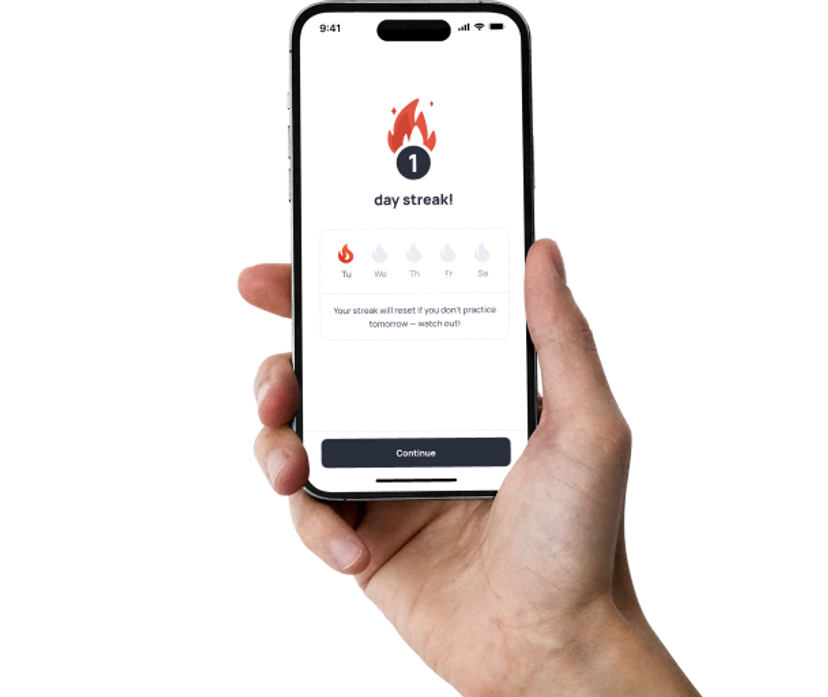
Perks you'll get in the full-stack course

Job referrals
Access to developer job openings from our hiring partners
English lessons
Interview prep and help building your personal growth roadmap

Job search tips
Resume and cover letter support tailored to full-stack roles

AI skills module
Hands-on practice using AI — from code generation to task automation

Mock interviews
Mock interviews to help you prep for tech hiring processes
*You can buy English lessons separately.
FORMAT COMPARISON
Which studying format suits you?
Weekdays, 9 am - 6 pm
In your free time

This might be your CV

Marta K.
Full-stack developer
Skills
- Implement responsive web pages using HTML and CSS
- Develop functionality and manage operations with advanced JavaScript
- Build full-stack applications using Node.js, React, Vue.js
- Integrate and manage databases using SQL and NoSQL
- Use TypeScript to enhance JavaScript quality and maintainability
- Create RESTful APIs for communication between front-end and back-end
- Use Docker to streamline development workflows
- Apply DevOps practices to automate processes
Technologies









90%
of Mate grads entered the tech field for the first time
Build a real developer portfolio
You'll create full-stack projects that showcase your skills in: JavaScript, HTML/CSS, React, Node.js, APIs, Databases. You'll be able to confidently show this work in interviews.
What's covered
Course roadmap
Get Started
3 topics
JavaScript Basics
14 topics
Discover the programming language best suited for beginners. We'll kick off with strings, functions, conditionals, loops, arrays and a few more!
Topics
- Introduction
- Your First JavaScript Program
- Main Concepts
- Numbers
- Strings
- Boolean
- Functions
- Conditional Statements
- Arrays
- Loops
- String Iteration
- Strings Methods
- Working With Arrays
- Practice
GenAI Essentials
6 topics
Learn how to use GenAI responsibly and effectively.
Topics
- How GenAI Works
- Limitations of GenAI
- Prompting
- Responsible Use
- GenAI for Learning
- How to Keep Up With AI
Course Fundamentals
1 topic
This module contains information, tips, and assignments that will help you study more effectively in the course and, in the long run, get a job in a better company with a higher salary.
Topics
- How to Learn Effectively
HTML + CSS Basics
16 topics
Next up: introduction to HTML and CSS. Find your way around fonts, semantics, responsiveness, selectors and specificity, media queries, links, and forms.
Topics
- Environment Setup
- HTML Basics
- CSS Basics
- Colors and Fonts
- Box Model Basics
- Semantic Basics
- Responsiveness Basics
- CSS Selectors
- Pseudo-Elements and Pseudo-Classes
- Specificity
- Links and URLs
- Images
- Media Queries
- Forms
- Position
- Extra Topics
Git and Terminal
5 topics
Terminal is an important tool for any developer, so it's high time for you to exercise basic commands! You'll start using a Git version control system, too.
Topics
- Environment Setup
- Command Line Basics
- Git Basics
- Working With Branches
- Working With Remote Repo (GitHub)
JavaScript Basics Extended
10 topics
On the basics stage we omitted a fascinating, but demanding concept: objects. We'll introduce you to them now, though not only — JavaScript still has a few aces up its sleeve!
Topics
- Code Style
- Working With Numbers
- Loops in Details
- Working With Strings
- Functions Revisited
- Switch
- Type Conversion
- Logical Operators
- Object Basics
- Extended Extra
HTML + CSS Advanced
9 topics
Back at HTML and CSS already, now to explore flexboxes, BEM, Sass, grids, and events. Once done, you'll code your very own landing page.
Topics
- Environment Setup
- Figma Installation
- Flexbox
- BEM
- Sass
- Transformations and Animations
- Grid
- Document and Events
- Landing [Portfolio Project]
JavaScript Advanced
13 topics
Having mastered the fundamentals, we're free to take on the advanced issues. So, brace yourself for methods, closures, prototypes, constructors, classes, and... something extra.
Topics
- How to Solve Tasks on Github
- Object Advanced
- Methods
- Array Methods
- Callbacks
- Array Iteration Methods Implementation
- Array Iteration Methods Usage
- Array Iteration Methods Test
- Closures
- JS Practice
- Prototype
- Constructors
- Classes
DOM, Events, Promises
5 topics
In this module, you will learn how to manage a page using JavaScript, as well as about asynchrony in JavaScript.
Topics
- DOM Basics
- DOM Styling and Sizing
- Events
- Promises
- Portfolio Project
Communication and Stress Management
7 topics
This module is designed to enhance your communication skills and overall soft skills. You’ll learn how to communicate effectively, feel confident during job interviews and public speaking, master techniques to manage stress, and much more. The best part? The module includes 28 practical tasks that will significantly boost your skills and help you see noticeable progress.
Topics
- Introduction to Communication & Stress Management
- Confidence Building and Stress Management
- Diction, Filler Words Reduction, and Body Language
- Public Speaking
- Job Interview
- Written Communication
- Social Media Communication Skills Development
React
7 topics
Chooo chooo, next station: component-based development, and one of the most popular library in the front-end realm, React. We'll learn how to combine it with TypeScript, too!
Topics
- Introduction
- Props
- Rendering Lists
- Handling Events
- List Manipulation
- Lifting State Up
- Updating State
TypeScript Basics
6 topics
In professional terms: TypeScript is a JavaScript superset. In human terms: it's JavaScript modified for more versatility and comfort. We'll go through, i.a., object types and classes.
Topics
- Introduction
- Basic Types
- Advanced Types
- Object Types
- Classes
- Generic Types
React with TypeScript
11 topics
Get acquainted with the magic of TypeScript in React.
Topics
- Introduction
- Forms
- Advanced Hooks
- Component Lifecycle
- Custom Hooks
- Loading Data From API
- Updating Data on Server
- State Management
- React Router
- Working With URLSearchParams
- Portfolio
Redux
3 topics
If JavaScript with React and TypeScript already feel like a small Lego set, good news! There's a fourth brick to play with, a library, Redux, helpful in app state management. Let's take a look 👀
Topics
- Main Concepts
- React Redux
- Async Redux
How the Web Works
6 topics
We interact with the Internet day by day, and yet, few know how it all works. If you don't, either — we've got your back. We'll explore the OSI model, HTTP, encryption, APIs and security issues.
Topics
- Introduction to the Web
- OSI Model
- HTTP
- API Interface
- Encryption
- Security in the Web
SQL Basics
11 topics
Semantically speaking, SQL closely resembles English, so you are in for a swift acquisition. We'll learn to use it with databases, to group, filter, sort and source data at wish.
Topics
- Introduction to SQL
- SELECT Statement
- WHERE Clause
- NULL Value, LIKE, BETWEEN, and IN Operators
- ORDER BY, LIMIT, DISTINCT Clauses
- Aliases
- Aggregate Functions
- GROUP BY Clause
- JOIN Clause
- Functions
- HAVING Clause
Node.js
13 topics
It's back-end time! Let's get acquainted with APIs, user authorization, databases and WebSockets, learn to deploy projects, write tests, use event loops and much, much more.
Topics
- Introduction
- Modules
- Development Environment
- Working With Command Line
- Working With Files
- HTTP Module
- Event Loop
- Streams
- Express
- Working With Databases
- Node.js App Deployment
- Authentication
- Realtime Applications
Team Project
7 topics
In 4 weeks, you will create a product from scratch in teams with colleagues from other areas, following Scrum methodology, and present the results to your mates. In the end, you will have another project to add to your resume and gain invaluable real-world experience.
Topics
- Week 0: Team Project. Intro
- Week 1: Jira Environment
- Week 2: Status Check
- Week 3: Estimates
- Week 4: How to Demo Your Work
- Final Week: Retrospective
- Team Project for Employment
Building Portfolio
1 topic
Tech interviews require a thorough preparation, so at this stage we'll revise material introduced hitherto and fill in any gaps.
Topics
- Final Portfolio Review
Employment
9 topics
Ready to enter the tech market? Well... we'll get you ready — with a great resume, cover letter, a LinkedIn profile and mock interviews. Recruiters are in for a true discovery!
Topics
- Employment Roadmap
- Preparing Your Resume
- Interview Preparation
- Cover Letter Preparation
- LinkedIn, DOU, Djinni
- How to Find and Apply for Vacancies
- Job Search Tips: Talking to Recruiters
- Work details FAQ
- MilTech
Vue.js
10 topics
Learning by doing is our favorite technique here, and this module is no exception. You'll learn the Vue.js framework by using it to build a ToDo App. How cool is that?!
Topics
- Introduction
- Templates
- State Management
- Forms
- Computed Values
- Components
- Interaction With Page Elements
- Interaction With the Server
- Error Handling
- TodoApp with Vue.js
Angular
1 topic
Angular is a JS framework used mostly to create scalable, sing-page web apps. We'll learn how to use it, beginning with forms through components, observables, state management, and more.
Topics
- Angular Basics
Algorithms and Data Structure
11 topics
Don't go running just yet, algorithms simply need some taming. Data structures, too: we'll take on arrays, linked lists, stacks, queues, hash maps and sets... among other things.
Topics
- Module Overview
- Algorithms complexity
- Arrays
- Binary search
- Two pointers
- Linked lists
- Stack
- Queue
- Trees
- Binary search tree
- Priority queue
Object Oriented Programming
2 topics
Object-oriented programming is a concept fundamental to many programming languages, most notably: Java, Python, JavaScript and C++. So — let's acquire a good understanding thereof.
Topics
- Basic Principles
- SOLID Principles
Unit Testing
5 topics
Every code has to be tested, and the more code there is, the more test volume there is. Unless we automate it! And we'll happily teach you to do so.
Topics
- Introduction to Javascript Automated Testing
- Unit Testing
- TDD Basics
- Mock Basics
- Advanced Mocks
DevOps Basics
5 topics
Here, we look at how software development is organized and optimized, and consider the role of a DevOps engineer.
Topics
- Introduction
- DevOps Culture and Practices
- DevOps as a Role
- SDLC and Development Methodologies
- Summary
Claude Code
59 topics
By the end of this course, you'll use Claude Code confidently in your real daily work - setting it up, shaping it to your own projects, connecting it to your tools, and running several agents at once. You'll finish with a complete, shareable setup built on a codebase of your own.
Topics
- Meet Claude Code and get it running
- Your first Claude session
- How Claude actually makes a change
- Permission modes: staying in control
- Headless mode: quick answers without the chat
- Resuming and managing sessions
- Slash commands and checking your context
- Running Claude Code in your editor
- Running long commands in the background
- What CLAUDE.md is and why it loads every session
- Conventions, build commands, architecture
- Writing rules that stick
- Scope: project-level vs. user-level vs. nested files
- When not to use CLAUDE.md
- Project rules & permissions
- Output styles: choosing how Claude responds to you
- Set up Claude on a real project
- The plan-then-execute mindset
- Entering and reading a plan in plan mode
- Approving, editing, and looping on a plan
- Model tradeoffs: Opus vs. Sonnet vs. Haiku
- Switching models mid-session
- The opusplan hybrid
- Managing context and cost across the loop
- How Claude works with your repo: status, diffs, history
- Committing well: staging and writing good commit messages
- Branches and pull requests
- Reviewing code and PRs with Claude
- Resolving merge conflicts
- Ship a change end to end
- What MCP is: Claude Code as a client to external tools
- Adding an MCP server
- Using MCP tools inside a session
- Scoping and managing servers: project vs. user
- MCP safely: permissions, secrets, and trust
- Letting Claude use CLI tools
- CLI tools vs. MCP servers: when to use which
- Claude skills
- CLAUDE.md vs. skills
- Creating a skill
- Organizing & reusing skills
- Custom slash commands: turning a repeated prompt into a one-word shortcut
- Passing arguments to a command
- What hooks are: actions that run on their own at key moments
- Common hooks: auto-format after an edit, block a risky command, run a check
- Writing and scoping your own hook
- Running Claude without you: CI, scheduled jobs, and pre-commit
- Wire Claude into your stack
- What a subagent is: isolated context, returns only results
- Built-in subagents: Explore, Plan, general-purpose
- Why parallel subagents help: context hygiene and speed
- Creating a custom subagent
- Tool and MCP permissions for subagents
- Orchestrating multiple subagents in parallel
- What a plugin is: one bundle of commands, skills, subagents, hooks, and MCP
- Installing and toggling plugins with /plugin, and the marketplace
- Building your own plugin from the pieces you've already made
- Sharing a plugin with your team
- Build a multi-agent workflow
Career Development
For full-time students9 topics
Module that will help you confidently pass your probation period, develop a professional development plan, prepare for performance reviews, and learn how to record your achievements. It provides practical tools for conscious career growth and preparation for new opportunities.
Topics
- Succeeding in Your Trial Period
- Personal Development Plan (PDP)
- Performance and Salary Reviews
- CV and LinkedIn Profile
- Cover Letter Preparation
- Interview Preparation
- DOU, Djinni
- How to Find and Apply for Vacancies
- Job Search Tips: Talking to Recruiters
265
Topics
4
Projects
From zero to hired
What’s your path to becoming a Full-stack developer?
Land your job in tech
Start your new job as a Full-stack developer.

Get in touch
Do I need a technical background? When can I start?
- We'll answer all your questions
- Help you choose the right course
- Get you in on our best deals
Skill level after the course
Mate graduates ace technical interviews























Who will guide you?

Coaches

Mentors

English Teachers

Education coordinators

Employment coordinators

Get in touch
Let's get in touch
- We'll answer all your questions
- Help you choose the right course
- Get you in on our best deals
Faq
Got questions? We’ve got answers
What's the difference between the full-time and flexible formats for the Fullstack course?
The full-time format is perfect if you want to break into tech fast. You'll study online Monday to Friday, from 9:00 AM to 6:00 PM. You'll attend regular webinars, live Q&A sessions, complete practical tasks, and stay in constant contact with your mentors and group. It's an intensive format — not ideal if you're working or studying at the same time.
The flexible format is designed for those who want to become fullstack developers at their own pace. You can study anytime — in the morning, after work, or on weekends. You'll still have access to mentors, group chats, and Q&A support. The platform is yours forever, so you can revisit materials whenever you need. It's easy to combine with a job, freelancing, or university.
No matter which format you choose, you'll get hands-on experience, real projects for your portfolio, job search support, and a certificate you can add to your resume and LinkedIn profile.
Will I get a certificate after the Full-stack course?
Yes! Once you complete the course, you'll receive a certificate confirming your skills in HTML, CSS, JavaScript, React, Node.js, APIs, and databases. You can add it to your resume, LinkedIn profile, or bring it to interviews. Many Mate academy grads have used their certificates to land their first Junior role.
What if I'm still not sure if development is right for me?
Do I need a technical background or math skills to become a Full-stack dev?
Not at all. You don't need a tech degree or strong math background to join the Fullstack course. Most of our students start from scratch and go on to become developers. We teach step by step — how frontend and backend work, the basics of logic, data structures, APIs, and the full development cycle. You'll use modern tools like Git, the terminal, Node.js, React, MongoDB/PostgreSQL — and you'll learn everything through hands-on projects in an online bootcamp format with job support.
How do I enroll to Full-stack course, and are there age limits?
It's easy. Just submit your application — what happens next depends on the format you choose:
Full-time format: You'll take a logic test, have a short interview with our team, and start learning online within a few days. You can apply from age 16 (with parental consent).
Flexible format: After applying, a manager will contact you with course details and pricing. You can start learning right after payment. You can apply from age 15 — but to be eligible for our job guarantee, you need to be legally able to work in your country by the time you finish the course.
Why are you so confident I'll be ready to work after the course?
We've been helping beginners launch tech careers for over 11 years. The Fullstack course is designed to prepare you for real work in real companies.
Here's why it works:
80% of the course is practice — you'll write code, build projects, work with frameworks and databases
The curriculum is always updated to match market demand
Mentors from the tech industry check your tasks, give feedback, and answer all your questions
Our career team helps you with everything: building your developer resume, optimizing your LinkedIn, preparing for interviews, and finding job openings in Ukraine or remotely
Most importantly — 80% of our grads get hired within a few months of finishing the course.
How does the money-back guarantee work at Full-stack course?
We're confident in our results — that's why we say: no job, no payment.
Full-time format: You learn for free with no upfront payment. You only start paying (12% of your salary) once you land a job in tech. If you don't find a job — you pay nothing.
Flexible format: After completing the course, you have 16 weeks to find your first job with the support of our career team. If you don't get a single offer — we refund the full cost of the course.
It's your financial safety net: either the course pays off, or it costs you nothing.
What's the full-time schedule like for Full-stacks?
The full-time format is built for rapid entry into tech. You'll study online Monday through Friday, from 9:00 AM to 6:00 PM — making consistent progress every single day.
Here's what a typical day looks like:
09:00–10:00 — practical tasks
10:00–11:30 — mentor session
11:30–12:30 — lunch break
12:30–14:00 — real case work
14:00–14:30 — Q&A session
14:30–17:00 — project work or individual assignments
17:00–18:00 — topic wrap-up and extra tips
It's the ideal pace if you want to switch to tech fast and land your first developer job in just a few months.
Will I only be able to work as a Fullstack Developer after the course?
Graduates of the Fullstack developer course often land their first jobs in positions such as Frontend developer, Frontend (Angular) developer, Frontend (HTML, CSS, JS) developer, Vue developer, React developer, or React Native developer.
Beyond that, you can also become a Fullstack developer, Fullstack (Vue) developer, Fullstack (Angular) developer, Fullstack (React) developer, or a Node.js developer.
What will I be able to do after completing the Fullstack developer courses?
The easiest way to the profession of Full-stack developer is courses where you can create full-fledged web applications from scratch. Our graduates know how to develop a user interface, configure the server part, work with databases, create and connect APIs, write understandable and structured code.
Why is it better to learn Full-stack with mentors and not on your own?
Studying with mentors will significantly speed up your progress. There is tons of information online, but it's easier than you think to get lost in it. That is why we offer a clear program, support and explanations of complex topics. Mentors will help you avoid mistakes, provide feedback and prepare you for real work in a team.
How to master the profession of Full-Stack Developer from scratch?
Our Fullstack course helps you learn a new industry from scratch. The program starts with the basics — learning JavaScript, HTML, CSS, terminals, frameworks, and databases. We built the Full-Stack course in such a way that you move step by step to more complex topics. Practice on real projects is another advantage offered by our Fullstack courses. You consolidate knowledge, form a portfolio, and with this you are already preparing for employment. The final stage is preparation for the interview and receiving an offer.
What should a computer be for studying Full-Stack online courses?
To complete the Full-Stack Developer course, you need a computer with a processor no lower than Intel i5, 8 GB of RAM and an SSD drive. It is recommended to use Windows 10/11, macOS or any modern Linux distribution.

Advantages of the Full-stack developer profession
Full-stack courses are an opportunity to master a universal role in the world of development, which opens a maximum of ways. You can work remotely - all you need is a laptop and Internet access. The demand for specialists is consistently high: startups, product companies and outsourcers are looking for them. Already at the start, you can apply for a salary of $800-1,200, and with experience, you can go to $2,000+. The acquired skills are universal: you can work with both frontend and backend — this is valuable for any team. In addition, the knowledge provided by the Full-stack course allows you to launch your own projects.
Career prospects after the Full-stack developer course
Full-stack courses open the way to all areas of development. After training, you will be able to start as a Junior and participate in the development of functional products: design the interface, implement logic on the front end, create the server part and much more. Thanks to the ownership of the full stack, you will quickly become an indispensable member of the team, who can be involved in both the frontend and the backend. And later there will be an opportunity to choose a specialization — for example, delve into React or Node.js and become a strong specialist in a specific area. In addition, Full-stack courses will allow you to work for foreign companies.
Who are the Full-stack developer online courses suitable for?
This is a profession for those who want to fully understand how websites and applications work. The Fullstack course will be useful if you want to enter IT from scratch. In Mate you will find a clear full-stack course with practice from the first weeks. This path is suitable for people with analytical thinking who like logic, structure and want to see the result of their work in action. If you have been interested in technology for a long time, but could not find an entry point, it is here. Also, the Full-stack developer course is an opportunity to take on a sought-after role with the ability to work remotely or in the office. It is not a narrow specialization - the training provides a deep understanding of the frontend, backend and architecture of the product.
How is training at the Full-Stack Developer course?
You can take the Full-Stack course in two formats: free with a full training day or paid with the opportunity to study at a convenient time. Training involves the study of Front-end and Back-end technologies and practical cases. How do Full-Stack courses work for you: you have access to educational modules and platform functionality; master the theory at webinars; practice on real cases; you receive regular feedback from the mentor. Also, our Fullstack course helps to create a resume, form a portfolio and prepare for an interview. Ultimately, our Full-Stack Developer courses will help you get a Junior position in this field.