Get AI tools training as a gift
4.9
Business analyst
course:
from zero to hired

Learn online from scratch
90%
of students had no technical background or IT experience
Course updated for 2026
100%
updated curriculum aligned with employer requirements

6 500+ Mate graduates are already working in IT
rating based on Google reviews
Business analyst: Salary
$1700
+22%YoY salary growth. Source: DOU
Who is Business analyst?
Every time a company plans a new feature or product, a Business analyst digs into user needs and turns them into growth opportunities for the team. They gather business requirements, shape early product concepts, and create simple prototypes before development starts. Impressive, right?

Employment in focus
We share the same goal — get you hired. With 20% theory and 80% practical tasks, we make it happen.
Market experts as your mentors
Mentors help you learn new topics, review your tasks, point out mistakes, and do live Q&A sessions.
Platform that has it all
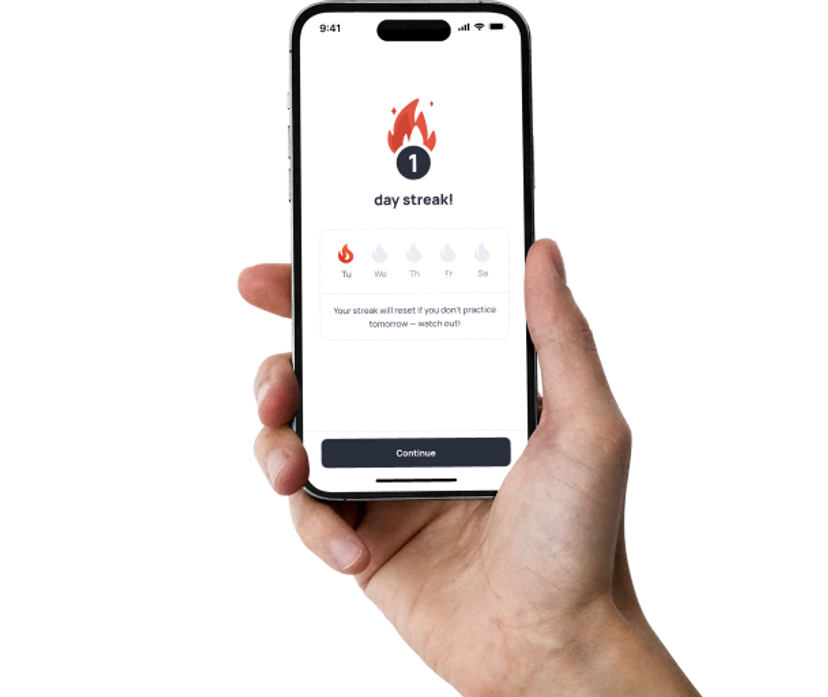
Learn through tutorials, interactive tasks, AI quizzes, and group projects — all in one place.
Your perks in every course

Job referrals
Get access to job openings from our partners before they hit the market.

English lessons
Gain skills to pass interviews and bond with your team.

Job search tips
Craft cover letters and resumes that land interviews.

AI skills module
Learn to talk to AI —and get better, more helpful answers.

Mock interviews
Practice for real-world interviews and build your confidence.
*You can buy English lessons separately.
FORMAT COMPARISON
Which studying format suits you?
Weekdays, 9 am - 6 pm
In your free time
This might be your CV

Marta K.
Business analyst
Skills
- Identifying and analyzing business and stakeholder requirements
- Developing documentation: from BRD, SRS, User Stories and Use Cases
- Visualizing processes using UML and BPMN diagrams
- Managing the backlog and shaping the MVP boundaries
- Analyzing stakeholders and planning communications
- Describing technical solutions: from database structure to API logic
- Creating prototypes and wireframes of the future product
- Working in Agile teams using Scrum and Kanban
Technologies





90%
of Mate grads entered the tech field for the first time
Build your portfolio while you learn
By the end of the course, you’ll have real projects that demonstrate your expertise to employers.

What's covered
Course roadmap
Get Started
3 topics
Getting to Know Business Analysis
4 topics
You will understand who a Business Analyst is and the value they create, learn how the IT industry and teams are structured, and discover the skills you need to confidently start your career.
Topics
- Introduction to Business Analysis
- Overview of the IT Industry
- Core Skills of a Business Analyst
- Course Overview
GenAI Essentials
6 topics
Learn how to use GenAI responsibly and effectively.
Topics
- How GenAI Works
- Limitations of GenAI
- Prompting
- Responsible Use
- GenAI for Learning
- How to Keep Up With AI
Requirements Engineering and Management
9 topics
Learn how to gather, analyze, and document requirements like a true business analyst—from interviewing stakeholders to writing clear user stories and use cases. You'll master practical frameworks (CCC, FURPS+, INVEST) and create structured, testable requirements that teams can actually develop.
Topics
- Understanding Requirements
- Requirements Elicitation
- Functional vs. Non-Functional Requirements
- Characteristics of Good Requirements
- Business Rules & Constraints
- User Story
- Acceptance Criteria
- Use Cases
- Documentation Standards
Software Development Life Cycle
4 topics
Understand how software is built from idea to release, how SDLC phases work, and why the cost of change grows over time. You’ll compare Waterfall and Agile, explore Scrum and Kanban in practice, and learn how modern IT teams organize roles, artifacts, and ceremonies.
Topics
- SDLC Fundamentals
- Waterfall and Agile Methodologies
- Scrum vs. Kanban
- Scrum in Detail
Technical Skills for BAs
7 topics
You will gain essential technical skills every modern Business Analyst needs: understand how systems, APIs, and databases work, and learn to use Git, Postman, and SQL in practice. This will help you confidently communicate with developers and speak the same technical language.
Topics
- Basic IT Concepts
- Version Control with Git
- Working with APIs
- Testing with Postman
- Databases & SQL
- Connecting to the Database
- Development Tools
Project Management Tools
8 topics
You will learn how to manage requirements and product development in real tools like Jira and Confluence, build and prioritize a backlog, create User Story Maps, estimate work, and handle changes professionally. By the end, you’ll understand how to turn requirements into a structured, manageable, and traceable product workflow.
Topics
- Introduction to Jira
- Managing Work in Jira
- Confluence
- User Story Mapping
- DoR, DoD, and Estimation
- Prioritization Techniques
- Requirements Traceability
- Change Management
Diagramming & Visual Modeling
7 topics
You will learn how to visualize requirements and processes using UML, BPMN, and ER diagrams, create Activity and Sequence diagrams, model data, and even build diagrams as code. This will help you explain complex systems clearly, structurally, and in a way your team can easily understand.
Topics
- Introduction to Modeling
- UML: Activity Diagrams
- UML: Sequence Diagrams
- BPMN Basics
- Diagramming as Code
- Data Modeling
- Data Mapping & Visualization
Communication and Stress Management
7 topics
This module is designed to enhance your communication skills and overall soft skills. You’ll learn how to communicate effectively, feel confident during job interviews and public speaking, master techniques to manage stress, and much more. The best part? The module includes 28 practical tasks that will significantly boost your skills and help you see noticeable progress.
Topics
- Introduction to Communication & Stress Management
- Confidence Building and Stress Management
- Diction, Filler Words Reduction, and Body Language
- Public Speaking
- Job Interview
- Written Communication
- Social Media Communication Skills Development
Stakeholder Management and Product Strategy
6 topics
You will learn how to identify and analyze stakeholders, choose the right engagement strategies, and build effective communication. You’ll also explore product strategy basics, MVP, and roadmaps so you can think not only in terms of requirements, but in terms of real business value.
Topics
- Identifying Stakeholders
- Analyzing Stakeholders
- Communication
- Product Vision & Strategy
- Defining the Solution
- Domain & Market Analysis
Building Your Portfolio & Career Path
2 topics
Build your portfolio and receive career advice in business analysis.
Topics
- Build Your Portfolio
- BA Career Path
Employment
9 topics
Ready to enter the tech market? Well... we'll get you ready — with a great resume, cover letter, a LinkedIn profile and mock interviews. Recruiters are in for a true discovery!
Topics
- Employment Roadmap
- Preparing Your Resume
- Interview Preparation
- Cover Letter Preparation
- LinkedIn, DOU, Djinni
- How to Find and Apply for Vacancies
- Job Search Tips: Talking to Recruiters
- Work details FAQ
- MilTech
Prototyping & UX
4 topics
You will learn how to create prototypes — from simple sketches to interactive solutions in Figma — and use AI tools to quickly validate ideas. This will help you visualize requirements and test solutions before development even begins.
Topics
- User Experience Fundamentals
- Prototyping Basics
- Tools and High-Fidelity
- AI Prototyping
SQL Basics
11 topics
Semantically speaking, SQL closely resembles English, so you are in for a swift acquisition. We'll learn to use it with databases, to group, filter, sort and source data at wish.
Topics
- Introduction to SQL
- SELECT Statement
- WHERE Clause
- NULL Value, LIKE, BETWEEN, and IN Operators
- ORDER BY, LIMIT, DISTINCT Clauses
- Aliases
- Aggregate Functions
- GROUP BY Clause
- JOIN Clause
- Functions
- HAVING Clause
Using AI for Work
4 topics
Boost your productivity with AI — simple, practical, no coding or technical background required.
Topics
- Introduction to AI
- Working with Claude
- Vibe coding
- AI for Video Generation
Claude Code
59 topics
By the end of this course, you'll use Claude Code confidently in your real daily work - setting it up, shaping it to your own projects, connecting it to your tools, and running several agents at once. You'll finish with a complete, shareable setup built on a codebase of your own.
Topics
- Meet Claude Code and get it running
- Your first Claude session
- How Claude actually makes a change
- Permission modes: staying in control
- Headless mode: quick answers without the chat
- Resuming and managing sessions
- Slash commands and checking your context
- Running Claude Code in your editor
- Running long commands in the background
- What CLAUDE.md is and why it loads every session
- Conventions, build commands, architecture
- Writing rules that stick
- Scope: project-level vs. user-level vs. nested files
- When not to use CLAUDE.md
- Project rules & permissions
- Output styles: choosing how Claude responds to you
- Set up Claude on a real project
- The plan-then-execute mindset
- Entering and reading a plan in plan mode
- Approving, editing, and looping on a plan
- Model tradeoffs: Opus vs. Sonnet vs. Haiku
- Switching models mid-session
- The opusplan hybrid
- Managing context and cost across the loop
- How Claude works with your repo: status, diffs, history
- Committing well: staging and writing good commit messages
- Branches and pull requests
- Reviewing code and PRs with Claude
- Resolving merge conflicts
- Ship a change end to end
- What MCP is: Claude Code as a client to external tools
- Adding an MCP server
- Using MCP tools inside a session
- Scoping and managing servers: project vs. user
- MCP safely: permissions, secrets, and trust
- Letting Claude use CLI tools
- CLI tools vs. MCP servers: when to use which
- Claude skills
- CLAUDE.md vs. skills
- Creating a skill
- Organizing & reusing skills
- Custom slash commands: turning a repeated prompt into a one-word shortcut
- Passing arguments to a command
- What hooks are: actions that run on their own at key moments
- Common hooks: auto-format after an edit, block a risky command, run a check
- Writing and scoping your own hook
- Running Claude without you: CI, scheduled jobs, and pre-commit
- Wire Claude into your stack
- What a subagent is: isolated context, returns only results
- Built-in subagents: Explore, Plan, general-purpose
- Why parallel subagents help: context hygiene and speed
- Creating a custom subagent
- Tool and MCP permissions for subagents
- Orchestrating multiple subagents in parallel
- What a plugin is: one bundle of commands, skills, subagents, hooks, and MCP
- Installing and toggling plugins with /plugin, and the marketplace
- Building your own plugin from the pieces you've already made
- Sharing a plugin with your team
- Build a multi-agent workflow
150
Topics
1
Project
From zero to hired
What’s your path to becoming a Business analyst?
Land your job in tech
Start your new job as a Business analyst.

Get in touch
Do I need a technical background? When can I start?
- We'll answer all your questions
- Help you choose the right course
- Get you in on our best deals
Skill level after the course
Mate graduates ace technical interviews







































Who will guide you?

Coaches

Mentors

English Teachers

Education coordinators

Employment coordinators

Get in touch
Let's get in touch
- We'll answer all your questions
- Help you choose the right course
- Get you in on our best deals
Faq
Got questions? We’ve got answers
How do full-time and flexible formats differ?
In the full-time schedule, you study online from 9 AM to 6 PM, Monday to Friday. You’ll attend webinars, do practical tasks, and get help from mentors. There are group video calls four times a week in the afternoon. This intense schedule is not good if you want to work at the same time.
The flexible schedule lets you learn at your own pace. You decide when and how many hours to study. Mentors are available to help you, and you can chat and join video calls with classmates. Plus, you get lifetime access to the course, so you can learn whenever you want.
Can I fit studying at Mate with other activities?
In the flexible format, you can balance your studies with work or school. You set your own pace and receive support from our mentors throughout the course.
In the full-time format, it’s hard to combine studies with work or school due to its intensity. You’ll need to fully commit, studying from 9 am to 6 pm, Monday to Friday.
Will I get a certificate upon completion?
Sure! After finishing our course, you'll get a certificate. More than 6500 of our graduates use it to show their skills on LinkedIn and other social media. But our main focus is helping you find a job, and we'll do everything we can to support you in that.
How do I choose a profession?
Do I need math or tech background to enroll?
No, you don’t need math or a technical background to enroll. In fact, 9 out of 10 Mate students come from non-technical backgrounds. Our job is to teach you the skills you need and help you land a job in tech.
How do I enroll?
To enroll in the full-time course, start by filling out an application and taking a short logic test with 15 questions. If your English level is below Pre-intermediate, we'll ask you to make a short video about yourself. Once we check that your English is good enough for learning, you can move on with your enrollment and set up an interview with our manager.
For the flexible course, just send an application. Our manager will reach out to explain the course details and help you pick the best option. You’ll get access to the course right after you pay.
Are there any age limits for this course?
You can apply for the full-time course starting at age 16 with your parents' permission. For the flexible course, you can begin if you’re at least 15 years old.
The employment guarantee applies if you reach the legal working age in your country by the time you finish the course.
How are you so sure that l'll find a job?
For over 10 years, we’ve been helping people kickstart their tech careers — and we’ve gotten pretty good at it.
Our courses are built around what companies actually want, with tons of hands-on practice to get you job-ready. And you’re never on your own — we’ll guide you every step of the way, from polishing your resume to nailing your interviews.
The best part? 80% of our grads land a tech job just a few months after finishing the course.
How does money-back guarantee work?
For full-time graduates, you only start paying for your education after finding a tech job. The payment is 12% of your net salary for 36 months. If you don’t get a job, you pay nothing.
If you finish the flexible course, actively search for a job with our support for 24 weeks, and don't receive any offers, you can get a full refund.
What's the schedule on full-time?
The full-time schedule combines theory lessons, practice, and Q&A sessions:
9:00 AM - 10:00 AM — Algorithms 10:00 AM - 11:30 AM — Theory 11:30 AM - 12:30 PM — Break 12:30 PM - 2:00 PM — Practice 2:00 PM - 2:30 PM — Q&A session 2:30 PM - 5:00 PM — Practice 5:00 PM - 6:00 PM — Q&A session
What jobs can I get after finishing the course?
Graduates of the “Business Analyst” course most often start their careers in roles like Junior Business Analyst, Business Analyst, or Business Consultant, where they gain practical experience working with business requirements, processes, and analytics. As you build experience and refine your business analysis skills, you can progress to more senior and responsible roles such as Senior Business Analyst, Lead Business Analyst, or even transition into strategic positions like Product Manager or Business Analytics lead, working on bigger projects and driving business decisions.
What will I be able to do after completing the Business Analyst course?
Our “Business Analytics” course includes clearly structured modules designed to help you master both practical and communication skills for a successful Business Analyst career. You’ll learn how to identify and analyze business requirements from stakeholders, create detailed documentation (BRD, SRS, User Stories, Use Cases), and work with backlogs and MVP boundaries so development teams understand what to build and when.
During the training, you’ll also learn how to define technical solutions, describe database structures and API logic, visualize processes using UML and BPMN diagrams, and create prototypes and wireframes for future products before development begins. The course teaches how to analyze stakeholders and plan effective communications, and how to work productively in Agile teams using Scrum and Kanban — all core competencies for modern business analysis.
How are online Business Analytics courses better than self-study?
A Business Analytics course provides a structured learning path that lets you master key concepts step by step without confusion or gaps in your knowledge. You’ll get personalized feedback from experienced mentors and work on real business analysis cases, unlike self-study where you often lack guidance. Our course also includes interaction with other students through chats and video calls, where you can share experiences, discuss ideas, and motivate each other to grow as business analysts.
How to master the profession of Business Analyst from scratch?
To become a Business Analyst from scratch, you start with the fundamentals: understanding how to identify and analyze business and stakeholder requirements, document needs (BRD, SRS, User Stories), work with processes, and create product prototypes. As you progress, you learn more advanced approaches — how to build UML and BPMN diagrams, describe technical solutions, define MVP boundaries, and manage backlogs in Agile environments like Scrum and Kanban. Our structured business analysis course is designed to take you from basic principles to real business analysis tasks. You’ll work on practical cases, create documentation and prototypes, and strengthen your skills with mentor support and a community of peers.
What should a computer be for studying on the Business Analyst online course?
To complete the online “Business Analyst” course, you’ll need a computer or laptop with solid performance. A device with at least an Intel Core i5 processor, 8 GB of RAM, an SSD, and a stable Internet connection is sufficient. Most business analytics tools are online-based, so reliable Internet access is important for smooth learning and working with real analytics and documentation tools.

Benefits of the Business Analyst Profession
High demand in business and IT: The role of Business analyst is one of the most sought-after in both corporate and technology sectors because business analysts analyze business processes, gather requirements, and help teams make data-driven decisions that improve outcomes for organizations. Strong earning potential: Business analysts earn competitive salaries. Entry-level Business Analyst roles often start with solid income, and with experience and strong analytical skills — especially in IT business analyst positions — salaries can grow significantly as your expertise increases. Flexible work formats: The business analyst role fits both office-based and remote work, giving you the opportunity to collaborate with local teams or work with global companies from anywhere. Versatility across projects: A business analyst contributes to many types of projects — from IT systems and software solutions to finance, logistics, and operations — gaining diverse experience and solving real business problems. Direct impact on business results: As a business analyst, you shape product requirements, build early prototypes, and guide development teams so that project goals are met faster and more accurately.
Career Prospects After Business Analytics Training
Training in Business analytics and business analysis opens pathways to roles like Junior Business Analyst, Business Analyst, or Business Consultant, eventually leading to senior positions such as Senior BA or Product Manager. Your business analyst career grows through real projects, stronger analytical skills, and proven experience with requirements and process improvement — and with growth comes higher salaries and greater responsibility. Demand for business analysts remains strong in IT, fintech, e-commerce, consulting, and many other fields where companies need experts to improve efficiency and make smarter decisions.
Who Online Business Analytics Courses Are For?
Beginners with no IT experience: If you’re just starting, Business analytics training helps you build key skills, understand the role of a Business Analyst, and start working confidently with requirements and workflows. Analysts from other fields: Working with data or business processes already? Structured Business Analyst training helps you organize your work, add systematic methods, and evolve into a full BA role. Marketers and business owners: Want to understand how decisions are made and optimize your processes? A Business Analytics course provides practical tools to improve business performance. Graduates in economics or tech: You have foundational knowledge — now business analysis skills turn that into practical expertise valued in IT and beyond.
How Business Analyst Training Works
You can take Business Analyst courses in a flexible format. Regardless of pace, the structure is the same: about 20 % theory with clear, structured lessons to quickly learn core concepts, and 80 % practical work solving real business cases. After each assignment, you’ll get personal feedback from a mentor and review mistakes to improve your business analysis skills. You’ll also be able to interact with classmates via chat or video calls, share ideas, and discuss tasks — just like real teamwork in business projects.