New course
Get AI tools training as a gift
4.9
QA engineer in MilTech: a course with job placement

Learn online from scratch
90%
of students had no technical background or IT experience
Course updated for 2026
100%
updated curriculum aligned with employer requirements

6 500+ Mate graduates are already working in IT
rating based on Google reviews
QA in MilTech: Salary
$1,755
+22%YoY salary growth. Source: DOU
Who is QA in MilTech?
Drones, onboard systems and embedded solutions that run without failures where the cost of an error is highest — that is the achievement of a QA engineer. A QA engineer in MilTech tests the hardware, firmware and software of defence and military products, finds defects, writes test documentation and helps make the product reliable in combat conditions.

Employment in focus
We share the same goal — get you hired. With 20% theory and 80% practical tasks, we make it happen.
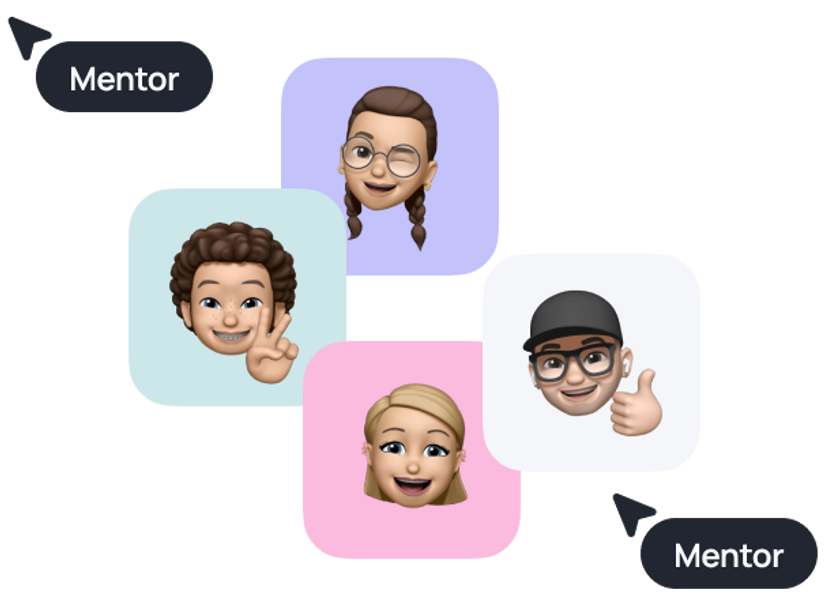
Market experts as your mentors
Mentors help you learn new topics, review your tasks, point out mistakes, and do live Q&A sessions.
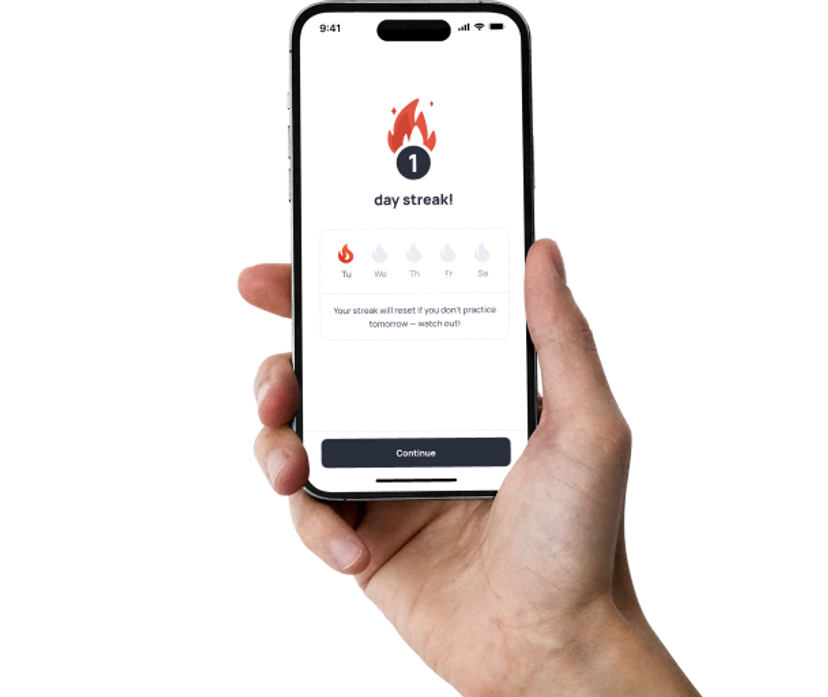
Platform that has it all
Learn through tutorials, interactive tasks, AI quizzes, and group projects — all in one place.
Your perks in every course

Job referrals
Get access to job openings from our partners before they hit the market.

English lessons
Gain skills to pass interviews and bond with your team.

Job search tips
Craft cover letters and resumes that land interviews.

AI skills module
Learn to talk to AI —and get better, more helpful answers.

Mock interviews
Practice for real-world interviews and build your confidence.
*You can buy English lessons separately.
FORMAT COMPARISON
Which studying format suits you?
Weekdays, 9 am - 6 pm
In your free time

This might be your CV

Marta K.
QA in MilTech
Skills
- Know how to analyze and write SQL queries
- Understand QA fundamentals and testing methodologies
- Can create and execute test plans and test cases
- Proficient in using Git for version control and terminal commands
- Have experience with JavaScript for testing and automation
- Can design and implement HTML and CSS for test environments
- Can test web and mobile applications effectively
- Know how to work with different testing environments
- Can test embedded and UAV systems (hardware, firmware, flight controllers)
- Know the basics of HIL testing and Fault Injection
- Can analyse flight logs, telemetry and system/firmware logs
- Understand the specifics of Verification & Validation, Requirements Traceability and Acceptance/Flight Testing in miltech products
Technologies











90%
of Mate grads entered the tech field for the first time
Build your portfolio while you learn
By the end of the course, you’ll have real projects that demonstrate your expertise to employers.
What's covered
Course roadmap
Get Started
3 topics
QA Basics
5 topics
Learn about being a QA engineer. Find your first bugs.
Topics
- Why Do We Need Testing?
- SDLC and Requirements
- Testing
- Bug Report
- Summary
GenAI Essentials
6 topics
Learn how to use GenAI responsibly and effectively.
Topics
- How GenAI Works
- Limitations of GenAI
- Prompting
- Responsible Use
- GenAI for Learning
- How to Keep Up With AI
SQL Basics
11 topics
Semantically speaking, SQL closely resembles English, so you are in for a swift acquisition. We'll learn to use it with databases, to group, filter, sort and source data at wish.
Topics
- Introduction to SQL
- SELECT Statement
- WHERE Clause
- NULL Value, LIKE, BETWEEN, and IN Operators
- ORDER BY, LIMIT, DISTINCT Clauses
- Aliases
- Aggregate Functions
- GROUP BY Clause
- JOIN Clause
- Functions
- HAVING Clause
QA Theory
13 topics
A thorough introduction to QA, and a giant module. Let's get you acquainted with test plans, types, cases and design, software development and testing lifecycles... among other things 🤐
Topics
- What is QA
- Testing Types
- What is a Bug Report
- Bug Reports in details
- Decomposition
- Test Cases
- Test Design Techniques
- Test Checklist
- Software Development Life Cycle
- Software Testing Life Cycle
- Test Plan
- Requirements
- TestRail & Jira
Git and Terminal
5 topics
Terminal is an important tool for any developer, so it's high time for you to exercise basic commands! You'll start using a Git version control system, too.
Topics
- Environment Setup
- Command Line Basics
- Git Basics
- Working With Branches
- Working With Remote Repo (GitHub)
JavaScript Basics
14 topics
Discover the programming language best suited for beginners. We'll kick off with strings, functions, conditionals, loops, arrays and a few more!
Topics
- Introduction
- Your First JavaScript Program
- Main Concepts
- Numbers
- Strings
- Boolean
- Functions
- Conditional Statements
- Arrays
- Loops
- String Iteration
- Strings Methods
- Working With Arrays
- Practice
JavaScript Basics Extended
10 topics
On the basics stage we omitted a fascinating, but demanding concept: objects. We'll introduce you to them now, though not only — JavaScript still has a few aces up its sleeve!
Topics
- Code Style
- Working With Numbers
- Loops in Details
- Working With Strings
- Functions Revisited
- Switch
- Type Conversion
- Logical Operators
- Object Basics
- Extended Extra
How the Web Works
6 topics
We interact with the Internet day by day, and yet, few know how it all works. If you don't, either — we've got your back. We'll explore the OSI model, HTTP, encryption, APIs and security issues.
Topics
- Introduction to the Web
- OSI Model
- HTTP
- API Interface
- Encryption
- Security in the Web
Testing Web Applications
3 topics
Every platform has its own characteristic, and this should be reflected in QA processes. To address this, you'll learn testing web applications — and understand what's so *web* about them.
Topics
- Browser DevTools
- Web Theory and Postman Basics
- Postman Advanced
Mobile testing
4 topics
Mobile as in smartphones, as in tablets, or as in smartwatches? Well... all of them, and all sport apps that require testing, just like web apps do. So: let's familiarize ourselves with the process.
Topics
- Mobile testing theory
- Guidelines
- Mobile testing activities
- Emulators and Tools
Working With Infrastructure
3 topics
What is a testing environment, and how many of them exist? How to set up a local server, and connect it to a database? Difficult questions, but we ain't afraid of addressing them - let's roll!
Topics
- Working Environments
- SQL
- Practice
QA Ethics
2 topics
Just a step away from employment, but a key step indeed. You'll learn how to conduct yourself on a tech interview and communicate with your future team.
Topics
- Interview Questions
- QA Ethics
Playwright Test Automation Core
11 topics
This module introduces the basics of web UI test automation using the Playwright tool. You will understand what test automation is and begin to create simple automated tests for web pages.
Topics
- Automated Testing Introduction
- Playwright Tool Introduction
- Run the First Test
- The Basic Page Interaction Methods
- Built-in Locators
- Assertions
- Custom Locators
- Test Organization
- Page Object Model
- Test Execution Configuration
- Module Recap and Next Steps
Security & Compliance Testing for MilTech
4 topics
Learn the basics of security and compliance testing in MilTech, including working with sensitive data and NDAs. Create a security checklist and perform basic threat modeling.
Topics
- Information Security Fundamentals for QA
- Compliance Standards in the Defense Sector
- Practice: Security Checklist & Basic Threat Modeling
- Working with Sensitive Data & NDAs
Safety-Critical & Reliability Testing in MilTech
4 topics
Learn how to test safety-critical systems, assess reliability and fault tolerance, and test under resource constraints. Create a risk-based test plan in practice.
Topics
- What Are Safety-Critical Systems?
- Non-Functional Testing: Reliability & Fault Tolerance
- Testing Under Resource Constraints
- Practice: Risk-Based Test Plan
Employment
9 topics
Ready to enter the tech market? Well... we'll get you ready — with a great resume, cover letter, a LinkedIn profile and mock interviews. Recruiters are in for a true discovery!
Topics
- Employment Roadmap
- Preparing Your Resume
- Interview Preparation
- Cover Letter Preparation
- LinkedIn, DOU, Djinni
- How to Find and Apply for Vacancies
- Job Search Tips: Talking to Recruiters
- Work details FAQ
- MilTech
113
Topics
7
Projects
From zero to hired
What’s your path to becoming a QA in MilTech?
Land your job in tech
Start your new job as a QA in MilTech.

Get in touch
Do I need a technical background? When can I start?
- We'll answer all your questions
- Help you choose the right course
- Get you in on our best deals
Skill level after the course
Mate graduates ace technical interviews


































Who will guide you?

Coaches

Mentors

English Teachers

Education coordinators

Employment coordinators

Get in touch
Let's get in touch
- We'll answer all your questions
- Help you choose the right course
- Get you in on our best deals
Faq
Got questions? We’ve got answers
What jobs can I get after the course?
Graduates most often take Junior QA engineer roles at product hardware, embedded, UAV and MilTech companies: testing drones and onboard systems, firmware, communication links and ground stations. At the same time, the course does not narrow your options — the classic QA manual and automation tester roles in regular software QA remain open to you. With experience you can move on to Middle and Senior QA, QA Lead, or adjacent engineering roles.
What will I be able to do after completing the QA engineer in MilTech course?
The course is built from modules that develop both the technical and the working skills needed in defence tech. You'll learn to: design tests for hardware and embedded systems, tell hardware, firmware and integration defects apart, test flight controllers and communication links, run HIL testing and fault injection, analyse telemetry and flight logs, work with requirements, traceability and test evidence, write technical test reports and take part in acceptance testing — everything you need to start a career in QA for hardware, embedded, UAV and miltech products.
How is the online course better than self-study?
The course gives you structure: you move from electronics to embedded systems and then to QA methodology, with no gaps and no chaotic googling. In hardware this matters a lot: the information is scattered across forums, vendor documentation and videos, and working out on your own what exactly to check in a flight controller and how to prove a defect is close to impossible. During the training you get feedback from mentors with MilTech experience, work on real cases and go through the typical defects that show up in flight. The course also includes interaction with other students in chats and video calls, where you can exchange experience and motivate each other.
How to master the QA engineer in MilTech profession from scratch?
To enter the profession from scratch, you start with the basics: fundamental testing, test design and working with a bug tracker, then electronics and components, embedded system architecture, UART, SPI, I2C and CAN interfaces, and the anatomy of a drone. Only then comes the specifics: HIL testing, fault injection, flight log analysis, verification & validation and acceptance testing. Our course is built in exactly this order — from basic principles to more advanced concepts. Throughout the training you work with real logs and configurations, and finish with a full testing cycle for a UAV system in the Capstone project. Mentor support and the student community matter just as much — and all of it comes with the structured format of the course.
Do I need experience with electronics or hardware to take the course?
No, prior experience is not required. The basics of electronics are covered by a dedicated module, Hardware Fundamentals of Electronics: voltage and current, components, reading schematics, printed circuit boards, soldering and power supplies. It comes before the embedded and UAV modules precisely so that students without a technical background don't fall behind. According to our course statistics, 90% of students had no technical education or IT experience before studying with us.
What kind of computer do I need for the course?
For the course you'll need a computer or laptop with a processor no lower than Intel Core i5, 8 GB of RAM (16 GB is better for working with the SITL and Mission Planner simulators), an SSD drive and stable internet. Windows or Linux will do; on macOS some firmware tools work with limitations. You don't need your own drone or boards to start — the practice is built on simulators, real logs and course materials.

Advantages of the QA engineer in MilTech profession
A QA course for MilTech is your entry into a profession where demand in Ukraine is growing faster than the market can train specialists. Every drone, onboard computer and communication link passes through a QA engineer's hands: they are the ones who catch defects before those defects show up in the field. As defence tech grows, the need for testers with hardware and embedded expertise is rising both in Ukraine and across the European market. In Ukraine, an entry-level QA engineer earns around $700–900. With experience in hardware and embedded, this grows to $1,800–3,000 and above: there are far fewer specialists with UAV expertise than in classic web testing, so competition for them is higher. Work in MilTech is mostly hybrid or on-site: testing hardware requires a bench, a lab and real equipment. In exchange, this field offers what regular outsourcing does not — deferment from mobilisation at critical-infrastructure companies, a stable domestic market, and a tangible contribution to the country's security. The projects ahead of you are the ones where the cost of an error is highest: testing flight controllers, radio and video links, verifying systems in field conditions, analysing post-flight logs, and running acceptance tests together with the customer.
Career prospects after completing the QA engineer in MilTech course
After completing the course, you'll be able to start your career as a Junior QA engineer at product hardware, embedded and UAV companies, as an onboard systems tester, or as a QA engineer on a team building drones. With 6–18 months of active practice, you can progress to Middle QA engineer, and in a few years to Senior QA or QA Lead. Depending on your interests and strengths, you can go deeper into HIL benches and embedded test automation, field and acceptance testing, verification & validation, or move into adjacent roles: test engineer, system engineer, requirements engineer. These skills work outside the defence sector too: hardware and embedded QA are needed in automotive, medical and industrial electronics and in IoT — in Ukraine and on the European market alike.
Who is the QA engineer in MilTech online course for?
The course is for anyone who wants to test not just interfaces, but real devices. Here's who will benefit: For beginners: no prior experience in IT or electronics is required — the fundamentals are covered by a dedicated module, Hardware Fundamentals of Electronics, which opens the specialisation. For students of technical and non-technical majors: the course lets you start working before you graduate and enter a field where junior specialists are in higher demand than in classic web QA. For career changers: you can study alongside your current job, and the flex format lets you move at your own pace. For working QA engineers: if you already test web or mobile applications, the course adds hardware, embedded and UAV expertise — the area with the sharpest talent shortage right now. For people already working with drones: FPV pilots, technicians, radio amateurs and junior engineers will get the structure and methodology to turn their hobby into a profession.
How does the QA engineer in MilTech course work?
The online QA engineer in MilTech course is practice-focused, with only 20% theory. You go through the core QA programme and then four specialised modules: hardware fundamentals of electronics, embedded and UAV systems, hardware and embedded QA, and miltech QA with a final project. You don't need your own equipment to start: most of the practice can be done in SITL and Mission Planner simulators, analysing real flight logs and working with flight controller firmware on emulators. The course ends with a Capstone project: you run the full testing cycle for a sample UAV system — from requirements and a test plan through defects, evidence and a final report. That becomes your portfolio for interviews. The format is flexible: full-time or flex, weekly calls with mentors, feedback on your work, and a student community where you can exchange experience instead of being left alone with the material.