New course
Get AI tools training as a gift
Product analyst course: from zero to hired


Perfect for newbies
90%
of our students start with no technical background
Course updated in 2026
100%
industry-relevant curriculum built to meet employer expectations

6 000+ employed Mate academy grads
rating based on Google reviews
Product Analyst: Salary
$1,100
+22%YoY salary growth. Source: DOU
Who is Product Analyst?
Every time a team wants to understand how product users behave, a Product analyst dives into the data: writing SQL queries, calculating metrics, building funnels, and finding insights that show what to improve. They turn raw numbers into decisions that help the product grow. Impressive, right?

Employment in focus
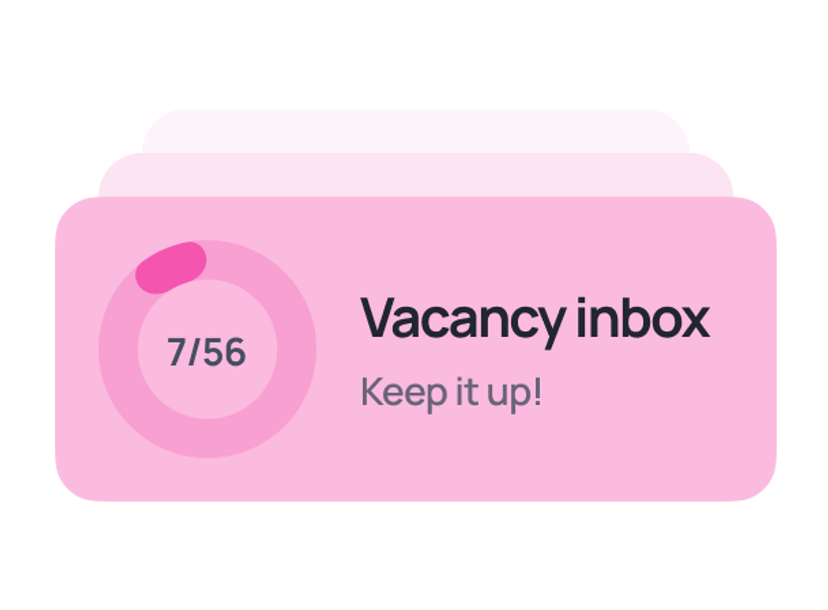
We share the same goal — get you hired. With 20% theory and 80% practical tasks, we make it happen.
Market experts as your mentors
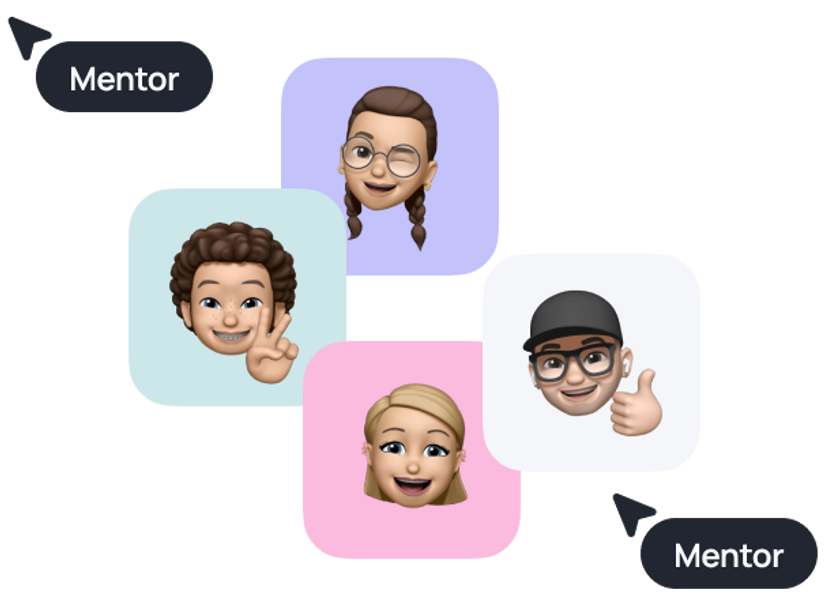
Mentors help you learn new topics, review your tasks, point out mistakes, and do live Q&A sessions.
Platform that has it all
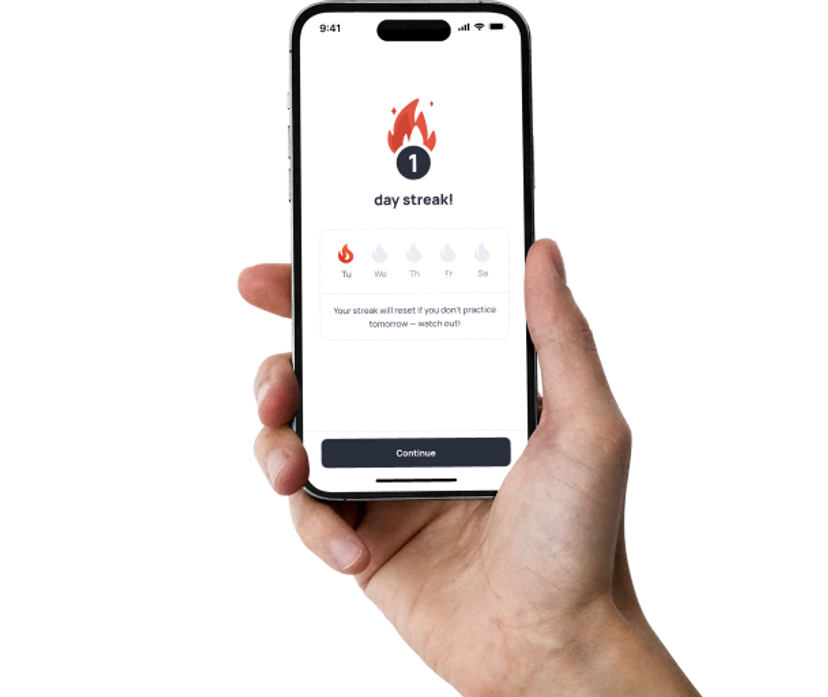
Learn through tutorials, interactive tasks, AI quizzes, and group projects — all in one place.
Your perks in every course

Job referrals
Get access to job openings from our partners before they hit the market.
English lessons
Gain skills to pass interviews and bond with your team.

Job search tips
Craft cover letters and resumes that land interviews.

AI skills module
Learn to talk to AI —and get better, more helpful answers.

Mock interviews
Practice for real-world interviews and build your confidence.
*You can buy English lessons separately.
FORMAT COMPARISON
Which studying format suits you?
Weekdays, 9 am - 6 pm
In your free time
This might be your CV

Marta K.
Product Analyst
Skills
- Writing SQL queries to extract, join, and filter data
- Running A/B tests and validating product hypotheses with statistics
- Calculating and tracking product metrics: acquisition, retention, and monetization
- Building conversion funnels and analyzing cohorts and retention
- Building interactive dashboards and visualizations in Tableau
- Calculating unit economics: LTV, CAC, and ROI
- Processing large datasets with Python (pandas, numpy)
- Calculating complex metrics using SQL analytical (window) functions
Technologies





90%
of Mate grads entered the tech field for the first time
Build your portfolio while you learn
By the end of the course, you’ll have real projects that demonstrate your expertise to employers.

What's covered
Course roadmap
Product Analyst Basics
4 topics
Get Started
3 topics
Learn how studying at Mate academy is organized: how the platform works, how interaction with mentors is structured, what the program includes, and get tips on how to study effectively and manage your time.
Topics
- How Education Process Works
- How Employment Process Works
- How to Study Effectively
GenAI Essentials
6 topics
Learn how to use GenAI responsibly and effectively.
Topics
- How GenAI Works
- Limitations of GenAI
- Prompting
- Responsible Use
- GenAI for Learning
- How to Keep Up With AI
Google Sheets
13 topics
In this module, you'll work with spreadsheets that are used to calculate, organize, analyze, and store data. You will learn how to process datasets, perform calculations using functions, and build pivot tables. You will also be able to visualize results in the form of graphs and charts.
Topics
- Spreadsheet — the Basic Tool for Analytics
- Data Importing
- Basic Data Types
- Formulas and Built-In Functions
- Cell Reference Types
- Data Cleaning
- Text Processing
- Working with Ranges
- Table Relationships
- Pivot Tables
- Data Visualization
- Data Exporting and Sharing
- Google Sheets Summary
SQL Basics
11 topics
Semantically speaking, SQL closely resembles English, so you are in for a swift acquisition. We'll learn to use it with databases, to group, filter, sort and source data at wish.
Topics
- Introduction to SQL
- SELECT Statement
- WHERE Clause
- NULL Value, LIKE, BETWEEN, and IN Operators
- ORDER BY, LIMIT, DISTINCT Clauses
- Aliases
- Aggregate Functions
- GROUP BY Clause
- JOIN Clause
- Functions
- HAVING Clause
SQL for Product Analytics
9 topics
You'll learn to write advanced SQL queries using window functions and optimize them — applying these skills right away on a real-world e-commerce product case with the help of AI.
Topics
- Databases and normalization types
- JOIN Types
- Union / Union ALL
- Subqueries and CTEs
- Window Functions, part 1 (ROW_NUMBER, RANK, LAG, LEAD)
- Window Functions, part 2 (SUM OVER, PARTITION BY)
- Product Case: E-Commerce Analysis
- Query Optimization Rules, Indexes
- AI and SQL
Product Metrics & User Behavior
9 topics
You'll learn to measure product health through key metrics — from funnels and cohorts to the North Star — and diagnose real shifts in user behaviour through hands-on cases.
Topics
- User Lifecycle
- Cohort Analysis
- DAU/MAU and Engagement Metrics
- North Star Metric
- Aha / Habit Moment
- Case Study: Calculating Retention
- Case Study: Calculating Funnel with SQL and AI
- Case Study: Metric Drop Diagnosis Using AI
- Amplitude Overview
Tableau & Data Visualisation
7 topics
You'll learn to build clear and compelling dashboards in Tableau — from the basic interface to advanced calculations and full product storytelling.
Topics
- Principles of Good Data Visualization
- Tableau Interface
- Calculated Fields and LOD Expressions
- Calculated Fields with AI
- Project: Funnel
- Case Study: Story Mode
- Data Storytelling
Unit Economics & Marketing Analytics
8 topics
You'll learn to evaluate product profitability through key financial and marketing metrics — and build your own unit economics model for both a website and a mobile app.
Topics
- Monetization Models
- Marketing Channels and Attribution
- LTV, ARPU, Conversion, and Churn
- CAC, ROI, and ROMI
- Case Study: Marketing Channel Performance Evaluation
- Payment Metrics and User Behavior Insights
- Case Study: Unit Economics Model in Sheets for a Website
- Case Study: Unit Economics Model in Sheets for an App
Python Basics
10 topics
Contrary to its name, there's nothing to be scared of, so let's approach Python head on. We'll start with strings, booleans, function, conditionals, loops and lists.
Topics
- Introduction
- Main Concepts
- Numbers
- Strings
- Boolean
- Lists
- Conditional Statements
- Loops
- Functions
- Summary
Python for Product Analytics
7 topics
You'll learn to work with data in Python — from basic tasks to cohort analysis and predictive models — and discover how AI speeds up your coding workflow.
Topics
- Pandas Basics
- Pandas Aggregations and Transformations
- NumPy Essentials
- Data Visualization with Matplotlib and Plotly
- Case Study: Retention and Cohort Analysis in Pandas
- Intro to Predictive Modeling
- Python and AI
Statistics for Product Decisions
7 topics
You'll learn to apply statistical methods for hypothesis testing and data-driven decision-making — including outlier analysis and understanding cause-and-effect relationships.
Topics
- Descriptive Statistics
- Probability Distributions
- Central Limit Theorem
- Hypothesis Testing
- Statistical Tests
- Errors and Statistical Power
- Outliers and Causality: The Whale Model Case
Product Hypotheses
6 topics
You'll learn to formulate, prioritise, and validate product hypotheses — from raw idea to structured framework — using AI and competitive analysis to fuel your thinking.
Topics
- Hypothesis Formulation
- Metric Selection
- Hypothesis Prioritization
- DIBB Framework
- From Idea to Hypothesis
- Competitor Analysis for Idea and Hypothesis Generation
A/B Testing & Experimentation
9 topics
You'll learn to design and analyse A/B tests — from experiment setup to interpreting results — and understand when testing is the right approach and when it isn't.
Topics
- What Is an A/B Test and Why It Matters
- Experiment Design
- Fake Door Testing
- Common A/B Testing Mistakes
- Results Analysis
- When A/B Testing Does Not Apply
- A/B Test Prioritization and Overlap
- A/B Dashboard in Streamlit
- A/B Test Analysis Using AI
Communication and Stress Management
7 topics
This module is designed to enhance your communication skills and overall soft skills. You’ll learn how to communicate effectively, feel confident during job interviews and public speaking, master techniques to manage stress, and much more. The best part? The module includes 28 practical tasks that will significantly boost your skills and help you see noticeable progress.
Topics
- Introduction to Communication & Stress Management
- Confidence Building and Stress Management
- Diction, Filler Words Reduction, and Body Language
- Public Speaking
- Job Interview
- Written Communication
- Social Media Communication Skills Development
Team Project
7 topics
In 4 weeks, you will create a product from scratch in teams with colleagues from other areas, following Scrum methodology, and present the results to your mates. In the end, you will have another project to add to your resume and gain invaluable real-world experience.
Topics
- Week 0: Team Project. Intro
- Week 1: Jira Environment
- Week 2: Status Check
- Week 3: Estimates
- Week 4: How to Demo Your Work
- Final Week: Retrospective
- Team Project for Employment
Employment
9 topics
Ready to enter the tech market? Well... we'll get you ready — with a great resume, cover letter, a LinkedIn profile and mock interviews. Recruiters are in for a true discovery!
Topics
- Employment Roadmap
- Preparing Your Resume
- Interview Preparation
- Cover Letter Preparation
- Google, LinkedIn, DOU, Djinni
- How to Find and Apply for Vacancies
- Job Search Tips: Talking to Recruiters
- Work details FAQ
- MilTech
132
Topics
3
Projects
From zero to hired
What’s your path to becoming a Product Analyst?
Land your job in tech
Start your new job as a Product Analyst.

Get in touch
Do I need a technical background? When can I start?
- We'll answer all your questions
- Help you choose the right course
- Get you in on our best deals
Skill level after the course
Mate graduates ace technical interviews




































Who will guide you?

Coaches

Mentors

English Teachers

Education coordinators

Employment coordinators

Get in touch
Let's get in touch
- We'll answer all your questions
- Help you choose the right course
- Get you in on our best deals
Faq
Got questions? We’ve got answers
How do full-time and flexible formats differ?
In the full-time schedule, you study online from 9 AM to 6 PM, Monday to Friday. You’ll attend webinars, do practical tasks, and get help from mentors. There are group video calls four times a week in the afternoon. This intense schedule is not good if you want to work at the same time.
The flexible schedule lets you learn at your own pace. You decide when and how many hours to study. Mentors are available to help you, and you can chat and join video calls with classmates. Plus, you get lifetime access to the course, so you can learn whenever you want.
Can I fit studying at Mate with other activities?
In the flexible format, you can balance your studies with work or school. You set your own pace and receive support from our mentors throughout the course.
In the full-time format, it’s hard to combine studies with work or school due to its intensity. You’ll need to fully commit, studying from 9 am to 6 pm, Monday to Friday.
Will I get a certificate upon completion?
Sure! After finishing our course, you'll get a certificate. More than 5000 of our graduates use it to show their skills on LinkedIn and other social media. But our main focus is helping you find a job, and we'll do everything we can to support you in that.
How do I choose a profession?
Do I need math or tech background to enroll?
No, you don’t need math or a technical background to enroll. In fact, 9 out of 10 Mate students come from non-technical backgrounds. Our job is to teach you the skills you need and help you land a job in tech.
How do I enroll?
To enroll in the full-time course, start by filling out an application and taking a short logic test with 15 questions. If your English level is below Pre-intermediate, we'll ask you to make a short video about yourself. Once we check that your English is good enough for learning, you can move on with your enrollment and set up an interview with our manager.
For the flexible course, just send an application. Our manager will reach out to explain the course details and help you pick the best option. You’ll get access to the course right after you pay.
Are there any age limits for this course?
You can apply for the full-time course starting at age 16 with your parents' permission. For the flexible course, you can begin if you’re at least 15 years old.
The employment guarantee applies if you reach the legal working age in your country by the time you finish the course.
How are you so sure that l'll find a job?
For over 10 years, we’ve been helping people kickstart their tech careers — and we’ve gotten pretty good at it.
Our courses are built around what companies actually want, with tons of hands-on practice to get you job-ready. And you’re never on your own — we’ll guide you every step of the way, from polishing your resume to nailing your interviews.
The best part? 80% of our grads land a tech job just a few months after finishing the course.
How does money-back guarantee work?
For full-time graduates, you only start paying for your education after finding a tech job. The payment is 12% of your net salary for 36 months. If you don’t get a job, you pay nothing.
If you finish the flexible course, actively search for a job with our support for 16 weeks, and don't receive any offers, you can get a full refund.
What's the schedule on full-time?
The full-time schedule combines theory lessons, practice, and Q&A sessions:
9:00 AM - 10:00 AM — Algorithms 10:00 AM - 11:30 AM — Theory 11:30 AM - 12:30 PM — Break 12:30 PM - 2:00 PM — Practice 2:00 PM - 2:30 PM — Q&A session 2:30 PM - 5:00 PM — Practice 5:00 PM - 6:00 PM — Q&A session
What jobs can I get after finishing the course?
Graduates of the “Product analyst” course most often start their careers as a Junior Product analyst, Product analyst, Data Analyst, or Marketing Analyst, where they gain their first hands-on experience with data, SQL, and product metrics. Over time, product analysts move into more senior roles such as Senior Product analyst or Lead Analyst, or grow toward Product Manager and Data Science.
What will I be able to do after completing the Product analyst course?
Our “Product analyst” course includes clearly structured modules that help you master practical product analytics skills. You’ll learn to write SQL queries, use analytical (window) functions, calculate product metrics, build conversion funnels, and analyze cohorts and retention. During the training, you’ll build dashboards in Tableau, calculate unit economics (LTV, CAC, ROI) in Google Sheets, process data with Python (pandas, numpy), and run A/B tests for data-driven decisions.
How are online product analytics courses better than self-study?
The “Product analyst” course provides a structured learning path that lets you master key product analytics skills step by step without confusion or gaps. You’ll get feedback from experienced practitioner-mentors and work on real datasets instead of abstract theory. Our course also includes interaction with other students through chats and video calls, where you can exchange experience and motivate each other.
How to master the profession of Product analyst from scratch?
To become a product analyst from scratch, start with the fundamentals: working with databases and SQL, calculating product metrics, and building funnels. As you progress, you’ll learn to analyze cohorts and retention, build dashboards in Tableau, calculate unit economics (LTV, CAC, ROI), process data with Python, and run A/B tests. Our course is designed to take you from basic concepts to real product analytics tasks: you’ll work on practical cases and build a portfolio of 2 projects, with mentor support and a community of peers.
What kind of computer do I need for the online Product analyst course?
To take the online “Product analyst” course, you’ll need a computer or laptop with solid performance. An Intel Core i5 processor or higher, at least 8 GB of RAM, an SSD, and a stable internet connection are sufficient.

Benefits of the Product analyst profession
High demand in product and IT companies: a product analyst is a key role, because a Product analyst turns user data into decisions that help the product grow. Strong earning potential: even at the start, a product analyst role offers solid income, and with experience in SQL, metrics, and A/B testing, salaries grow significantly. Flexible work formats: the profession fits both office-based and remote work, letting you collaborate with local and international companies at the same time. Data-driven decisions: a product analyst calculates metrics, builds funnels and cohorts, and runs A/B tests, so every decision is based on numbers, not intuition. Versatile tools: a Product analyst works with SQL, Tableau, Python, and Google Sheets — skills valued in e-commerce, fintech, IT, and mobile apps.
Career prospects after product analyst training
Product analytics training opens pathways to roles like Junior Product analyst, Product analyst, Data Analyst, or Marketing Analyst, eventually leading to positions such as Senior Product analyst or Product Manager. A product analyst’s career grows through real projects, confident work with SQL, metrics, and data visualization — and with that growth come higher salaries and greater responsibility. Demand for product analysts is strong in IT, fintech, e-commerce, gamedev, and mobile apps, where companies make data-driven decisions.
Who online Product Analytics courses are for?
Beginners with no experience: if you’re just starting, product analytics training helps you build the fundamentals — from SQL queries to calculating product metrics. Analysts from related fields: already working with data but want to systematically master product analytics, funnels, and A/B tests? This training structures your skills. Marketers and entrepreneurs: want to understand unit economics, LTV, and CAC and make data-driven decisions? A Product Analytics course gives you practical tools. Graduates in tech or economics: you have a foundation — now turn it into practical product analytics skills valued in IT.
How Product analyst training works
You take the “Product analyst” course in a flexible Flex format — at your own pace, combining study with work. The structure is the same: about 20% theory with clear, structured lessons, and 80% practical work on real cases, briefs, and creatives. After each assignment, you’ll get personal feedback from a mentor and review your mistakes to improve. You’ll also be able to interact with classmates via chat or video calls.